Introduction
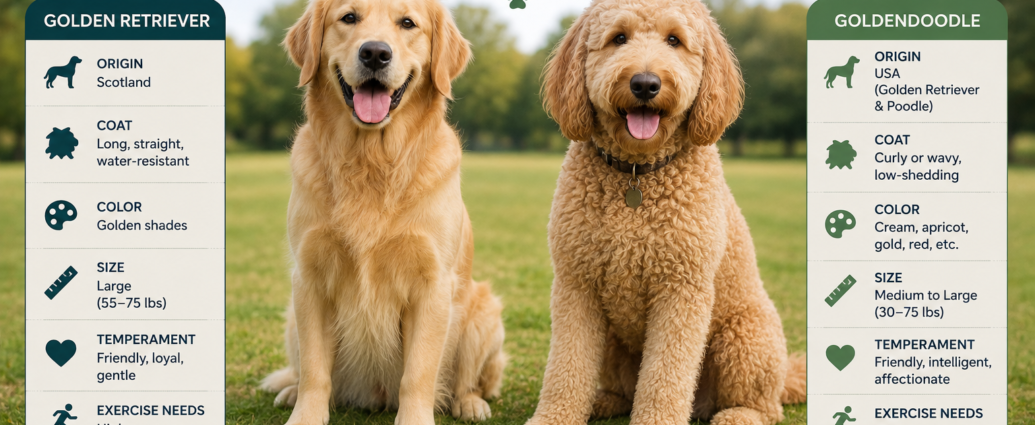
Golden Retriever vs. Goldendoodle is a comparison that comes up constantly among families drawn to the Golden Retriever’s temperament but curious whether the popular Poodle-hybrid alternative might suit them better. Both breeds share a friendly, people-oriented personality, but a closer Golden Retriever vs. Goldendoodle comparison reveals real differences in grooming costs, inherited health risks, and shedding that matter a great deal for day-to-day life and long-term budgeting. This guide breaks down exactly where these two popular family dogs diverge, so you can choose based on practical fit rather than assuming a Goldendoodle is simply a “better” or “safer” version of a Golden Retriever.
Why This Comparison Comes Up So Often
Goldendoodles were originally bred by crossing Golden Retrievers with Poodles, aiming to combine the Golden’s temperament with the Poodle’s lower-shedding coat. That shared ancestry is exactly why the Golden Retriever vs. Goldendoodle question is so common — the two breeds look related, share many personality traits, and are often marketed to the same type of family. But a hybrid doesn’t simply inherit the best of both parent breeds automatically, and understanding where the two genuinely differ is essential before assuming a Goldendoodle is the easier or healthier choice.
Grooming Costs: A Significant Practical Difference
Grooming is one of the clearest points of divergence in any Golden Retriever vs. Goldendoodle comparison, both in time commitment and in ongoing cost.
Golden Retriever grooming costs:
- Dense double coat with feathering, requiring brushing 3–4 times weekly but generally manageable at home
- Occasional professional grooming (every 8–12 weeks) is common but not strictly necessary for most owners
- Lower ongoing grooming expense overall, since their coat doesn’t require the same specialized trimming
Goldendoodle grooming costs:
- Curly or wavy coat that mats easily and requires far more frequent brushing — often every one to two days for curlier coats
- Professional grooming is typically necessary every 4–6 weeks, since their coat grows continuously rather than shedding out
- Significantly higher lifetime grooming costs, with many owners spending considerably more annually on professional grooming than a typical Golden Retriever owner would
In a Golden Retriever vs. Goldendoodle cost comparison, Goldendoodles are almost always the more expensive breed to maintain from a grooming standpoint, a factor that surprises many first-time doodle owners.
Shedding: The Original Reason for the Cross
Shedding is the trait most people associate with the Golden Retriever vs. Goldendoodle decision, since reduced shedding was the entire original goal behind the Goldendoodle cross.
Golden Retriever shedding:
- Moderate to heavy year-round shedding, with pronounced seasonal “blowouts” during coat changes
- Requires regular vacuuming and lint-rolling as a standard part of ownership
- Not considered hypoallergenic, and can trigger allergic reactions in sensitive individuals
Goldendoodle shedding:
- Generally low-shedding to non-shedding, particularly in dogs with a curlier, more Poodle-like coat
- Often marketed as more suitable for allergy sufferers, though results vary depending on which parent breed’s coat traits dominate
- Coat type is genuinically unpredictable even within the same litter, meaning some Goldendoodles shed more than advertised
Because coat genetics in a hybrid breed aren’t fully standardized, prospective owners specifically seeking low shedding for allergy reasons should understand that a Golden Retriever vs. Goldendoodle comparison on this trait alone isn’t a guarantee — individual Goldendoodles vary.
Health Risk Differences
Health is where the Golden Retriever vs. Goldendoodle comparison becomes more nuanced, since a hybrid doesn’t automatically inherit fewer health risks than either parent breed.
Golden Retriever health risks:
- Notably high cancer incidence, including hemangiosarcoma and lymphoma, which significantly affects average lifespan
- Predisposition to hip and elbow dysplasia
- Certain heart conditions occur at higher-than-average rates in the breed
Goldendoodle health risks:
- Can inherit cancer risk from the Golden Retriever side, meaning the hybrid doesn’t eliminate this concern entirely
- May inherit Progressive Retinal Atrophy or other Poodle-associated conditions
- Hip and elbow dysplasia remain a risk, particularly in larger Standard Goldendoodles
- Some evidence suggests “hybrid vigor” may modestly reduce the incidence of certain inherited conditions, though this isn’t guaranteed and depends heavily on the specific parent dogs used
A responsible Golden Retriever vs. Goldendoodle health comparison should avoid assuming the doodle is automatically the healthier option — reputable breeders who screen both parent breeds for known conditions matter more than the cross itself.
Which Is Right for Your Family?
Choosing between Golden Retriever vs. Goldendoodle often comes down to how much time and budget you’re willing to commit to grooming versus how much shedding you’re willing to tolerate. If lower shedding is a priority and you’re comfortable with higher grooming costs and more frequent professional appointments, a Goldendoodle may fit better. If you’d rather manage shedding with regular vacuuming and keep grooming costs lower, a Golden Retriever’s more predictable, lower-maintenance coat could be the better fit. Health risk, in either case, warrants equal attention regardless of which breed you choose.
Final Thoughts
The Golden Retriever vs. Goldendoodle decision isn’t a simple upgrade from one breed to the other — it’s a trade-off between predictable grooming costs and reduced shedding, with health risks that require diligence in either case. Both are loving, family-friendly dogs capable of thriving in the right home, but understanding these practical differences upfront helps set realistic expectations about time, budget, and long-term care before bringing either one home.