Introduction
Chihuahua Dental Care deserves far more attention than most toy breed owners realize, since Chihuahuas are among the most dental-disease-prone breeds in existence, often showing signs of periodontal disease as early as age two or three. This guide to Chihuahua Dental Care explains exactly why toy breeds face such elevated dental risk, what early tooth loss actually looks like, and what daily habits genuinely make a difference in preventing it. Whether you’re raising a Chihuahua puppy or managing dental issues in an adult dog, prioritizing Chihuahua Dental Care now can prevent painful extractions and health complications later.
Why Chihuahuas Are So Prone to Dental Problems
Chihuahuas carry a combination of traits that make Chihuahua Dental Care especially urgent compared to larger breeds. Their tiny jaws are often too small to properly accommodate a full set of adult teeth, leading to overcrowding that traps food debris and accelerates plaque buildup. This overcrowding, combined with retained baby teeth that sometimes fail to fall out naturally, creates ideal conditions for bacteria to thrive. Because their mouths are so small relative to standard tooth size, even minor plaque accumulation can progress to periodontal disease far faster than it would in a larger breed.
Understanding Periodontal Disease Progression
At the center of any effective Chihuahua Dental Care routine is understanding how periodontal disease actually develops, since catching it early makes an enormous difference in outcomes.
Stages of periodontal disease:
- Stage 1 (Gingivitis): Mild redness and inflammation along the gumline, fully reversible with proper cleaning
- Stage 2 (Early Periodontitis): Minor bone loss begins around the tooth root, requiring professional intervention to halt progression
- Stage 3 (Moderate Periodontitis): Significant bone loss and gum recession, often accompanied by visible tartar, bad breath, and discomfort while eating
- Stage 4 (Advanced Periodontitis): Severe bone loss frequently leading to tooth mobility and loss, along with potential systemic health risks from chronic bacterial infection
Signs of dental problems to watch for:
- Persistent bad breath, beyond typical “dog breath”
- Visible yellow or brown tartar buildup along the gumline
- Red, swollen, or bleeding gums
- Reluctance to eat, dropping food, or chewing on one side
- Pawing at the mouth or excessive drooling
Because small dogs can hide dental pain remarkably well, many owners don’t realize a problem exists until it has already progressed to a more advanced stage.
Building a Daily Chihuahua Dental Care Routine
Consistent home care is the foundation of effective Chihuahua Dental Care, since daily habits have a far greater cumulative impact than periodic professional cleanings alone.
Daily habits:
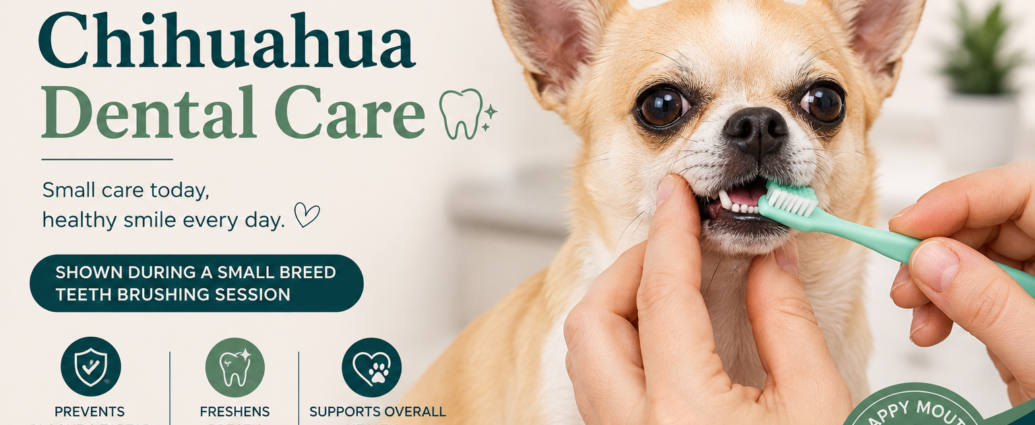
- Brush teeth daily using a dog-specific enzymatic toothpaste and a small, soft-bristled brush or finger brush sized appropriately for a toy breed’s mouth
- Introduce brushing gradually with positive reinforcement, since Chihuahuas can be sensitive about having their small mouths handled
- Offer dental chews formulated for small breeds, which mechanically help reduce plaque buildup between brushings
- Provide fresh water daily, and consider water additives designed to reduce bacterial buildup if recommended by your vet
Weekly and monthly checks:
- Lift the lips weekly to visually inspect for tartar buildup, redness, or unusual odor
- Monitor eating habits for any signs of discomfort, hesitation, or preference for softer foods
- Track retained baby teeth in puppies, since these often need veterinary extraction if they haven’t fallen out by six months of age
Professional Dental Care and Cleanings
Home care alone typically isn’t enough to fully prevent dental disease in high-risk breeds, which is why professional care remains an essential part of complete Chihuahua Dental Care.
Recommended professional care schedule:
- Annual dental exams starting from puppyhood, allowing your vet to catch overcrowding or retained baby teeth issues early
- Professional cleanings under anesthesia as recommended by your vet, often starting earlier than for larger breeds given the accelerated disease progression common in Chihuahuas
- X-rays during cleanings to assess bone health below the gumline, since visible tartar often represents only part of the underlying problem
What professional cleanings address that home care can’t:
- Removing tartar below the gumline, which brushing alone cannot reach
- Identifying and addressing loose or diseased teeth before they cause pain or infection
- Polishing teeth to slow future plaque accumulation
The Cost of Neglecting Dental Care
Untreated dental disease in Chihuahuas doesn’t stay confined to the mouth. Chronic bacterial infection from advanced periodontal disease has been linked to broader health complications, including stress on the heart, kidneys, and liver from ongoing low-grade inflammation entering the bloodstream. Beyond tooth loss itself, this makes consistent Chihuahua Dental Care a genuine whole-body health issue rather than a purely cosmetic concern.
Final Thoughts
Chihuahuas are affectionate, spirited companions, but their small size comes with a genuine dental vulnerability that demands more attention than most toy breed owners expect. Committing to daily brushing, regular at-home checks, and consistent professional cleanings as part of ongoing Chihuahua Dental Care gives owners the best chance of preventing early tooth loss and the broader health complications that come with untreated periodontal disease.