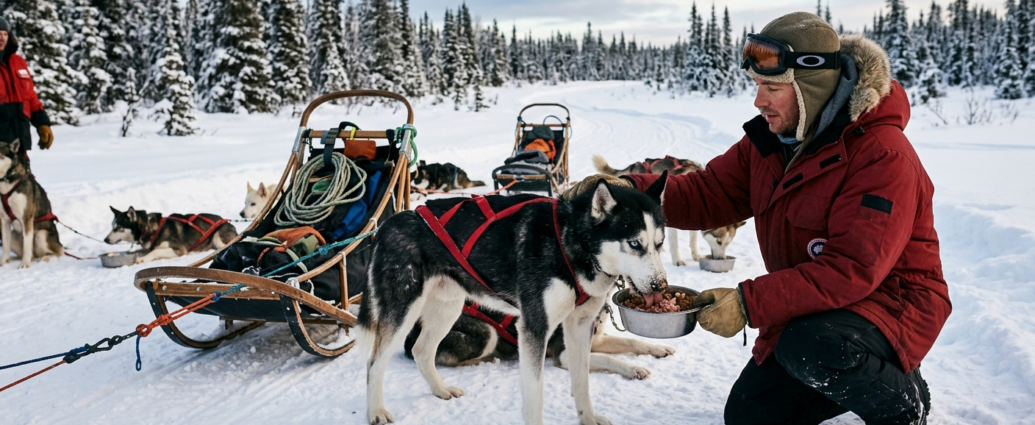
A properly calibrated Husky Working Diet looks nothing like standard feeding advice for the average dog, since Siberian Huskies and other sled breeds have a metabolism specifically adapted for sustained, extreme endurance work. This guide to a Husky Working Diet explains why these breeds burn calories so differently, how to calculate the right caloric intake for your dog’s actual activity level, and what nutritional building blocks matter most for a breed built for distance rather than sprinting. Whether you have a companion Husky or an active sled or skijoring dog, understanding a proper Husky Working Diet prevents both the underfeeding and overfeeding mistakes owners commonly make with this breed.
Why Huskies Have Unique Caloric Needs
Huskies were bred over generations to pull sleds across long distances in extreme cold, developing a metabolism capable of sustained aerobic output that most breeds simply can’t match. This adaptation is the entire reason a generic large-breed feeding chart doesn’t work a proper Husky Working Diet has to account for their unusually efficient fat metabolism and their tendency to maintain a lean body condition even on what looks like a modest calorie intake. Unlike many breeds that gain weight easily, working-line Huskies often struggle to maintain weight if fed like an average dog of similar size.
Understanding Caloric Needs by Activity Level
The foundation of any accurate Husky Working Diet is matching caloric intake to actual activity level, since the gap between a companion Husky and a working sled dog is enormous.
Companion or moderately active Huskies:
- Roughly 25–35 calories per pound of body weight daily for a Husky with regular walks and moderate play
- A 45-pound companion Husky might need approximately 1,100–1,600 calories per day, adjusted based on individual metabolism and body condition
Working or high-activity Huskies:
- Sled dogs in training or competition can require dramatically more — sometimes 1,500–2,500 calories per day or more during peak training and racing season
- Elite endurance sled dogs during multi-day races have been documented consuming caloric intakes far beyond what any companion dog would need, reflecting the extreme metabolic demands of sustained pulling work
- Caloric needs should scale directly with training intensity, increasing significantly during active training blocks and decreasing during rest periods
Adjusting a Husky Working Diet seasonally:
- Cold-weather activity increases caloric burn further, since maintaining body temperature during exertion in freezing conditions requires additional energy
- Off-season or rest-period feeding should be reduced accordingly to prevent unwanted weight gain when activity drops
Key Nutritional Components
Beyond raw calorie counts, a well-designed Husky Working Diet depends on the right balance of macronutrients to fuel sustained endurance work.
Fat as a primary energy source:
- Unlike sprinting breeds that rely heavily on carbohydrates, endurance sled dogs metabolize fat exceptionally efficiently as their primary fuel source during sustained exertion
- High-performance working diets often include a notably higher fat percentage than standard adult dog food, supporting the sustained energy release endurance work demands
Protein for muscle maintenance and recovery:
- Working Huskies need substantial, high-quality protein to support muscle repair after sustained exertion
- Animal-based proteins (poultry, fish, red meat) provide the amino acid profile best suited for recovery in high-output dogs
Hydration and electrolyte balance:
- Working dogs lose significant fluid and electrolytes during extended exertion, even in cold weather, making consistent access to water and, in some cases, electrolyte supplementation important during intense training periods
- Wetting kibble or incorporating moisture-rich foods can help support hydration in dogs that don’t drink enough on their own during active training
Avoiding Common Feeding Mistakes
Even well-intentioned owners often get a Husky Working Diet wrong in a few predictable ways.
Underfeeding a working dog:
- Assuming a Husky’s naturally lean build means they need less food than they actually do, leading to muscle loss and reduced performance in active dogs
- Failing to increase calories during periods of heavier training or cold-weather activity
Overfeeding a companion Husky:
- Applying a working sled dog’s caloric intake to a companion Husky that gets only moderate exercise, leading to unwanted weight gain
- Not adjusting portions downward during the off-season or periods of reduced activity
Ignoring individual variation:
- Treating all Huskies identically despite real differences in metabolism, age, and activity level between individual dogs
- Failing to monitor body condition regularly and adjust portions in response, rather than sticking rigidly to a fixed amount regardless of how the dog actually looks and performs
Monitoring and Adjusting Over Time
A sustainable Husky Working Diet isn’t a fixed formula, it requires ongoing monitoring. Regular body condition scoring (checking that ribs are easily felt but not visibly prominent, with a clear waist from above) helps catch both under- and overfeeding early. Tracking performance, coat condition, and energy levels alongside weight gives a fuller picture than the scale alone, particularly for working dogs whose muscle mass can mask changes in body fat.
Final Thoughts
Huskies and other sled breeds have genuinely unique metabolic demands that most standard feeding guidelines don’t account for. Building a proper Husky Working Diet around your dog’s actual activity level rather than generic breed-size charts ensures working dogs get the fuel they need for sustained performance while companion Huskies avoid the weight gain that comes from overfeeding a breed that looks deceptively lean even when healthy.