Introduction
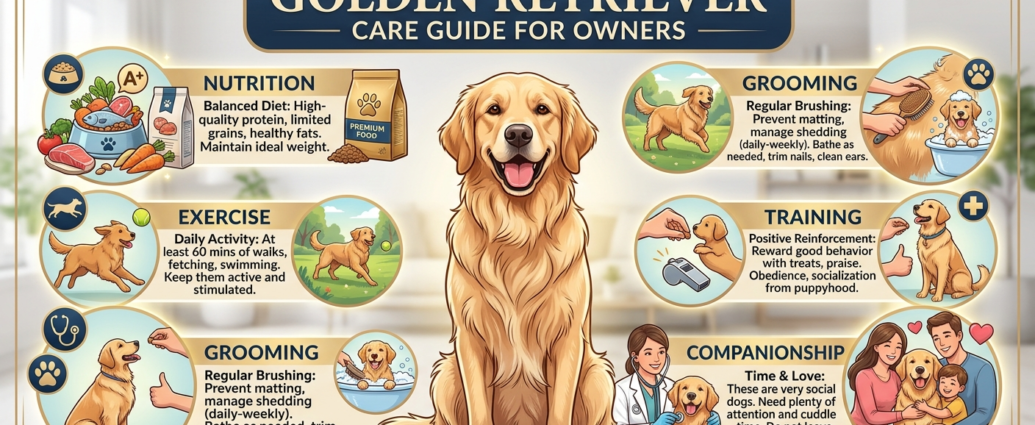
Bringing home a Golden Retriever means welcoming one of the friendliest, most trainable breeds into your family — but it also means committing to a lifetime of proactive care. This Golden Retriever Care Guide breaks down exactly what new and experienced owners need to know about breed-specific health risks, nutrition, and exercise, so you can help your dog live a longer, more comfortable life. Whether you’re preparing for a new puppy or fine-tuning the routine for an adult dog, this Golden Retriever Care Guide covers the essentials in one place.
Why Golden Retrievers Need Specialized Care
Golden Retrievers are a purpose-bred sporting breed, originally developed to retrieve waterfowl across long days in the field. That heritage still shapes the modern dog: high energy, strong food drive, a dense weather-resistant coat, and a body built for stamina rather than speed. Because of this background, generic dog-care advice often falls short. A proper Golden Retriever Care Guide has to account for the breed’s unique combination of enthusiasm, size, and genetic health predispositions.
Health Risks Every Owner Should Know
The health section of any Golden Retriever Care Guide is arguably the most important, since early awareness can add years to a dog’s life.
Joint Disorders: Hip and elbow dysplasia are common in the breed due to their size and genetics. Symptoms include stiffness after rest, reluctance to jump, and an altered gait. Maintaining a lean body condition and avoiding excessive high-impact activity during puppyhood both help protect the joints long-term.
Cancer Risk: Golden Retrievers face one of the highest cancer incidence rates of any breed, with hemangiosarcoma, lymphoma, and mast cell tumors appearing most frequently. Because early symptoms can be subtle, twice-yearly veterinary exams for adult dogs are strongly recommended rather than the standard annual visit.
Cardiac Issues: Subvalvular aortic stenosis, a congenital narrowing near the heart valve, is more prevalent in Goldens than in many other breeds. A veterinary cardiac auscultation during puppy checkups can catch this early.
Thyroid Imbalances: Hypothyroidism often develops in middle-aged Golden Retrievers, presenting as unexplained weight gain, low energy, and coat changes. Bloodwork during routine exams can catch this before symptoms become severe.
Skin and Ear Sensitivities: Allergies and ear infections are common, partly due to their coat density and floppy ear structure, which trap moisture and debris.
Any thorough Golden Retriever Care Guide should stress that breed-specific screening — hip and elbow X-rays, cardiac evaluation, and eye exams — is far more valuable than generic wellness checks alone.
Building the Right Diet
Diet is where many owners unintentionally shorten their dog’s healthspan, since Golden Retrievers are notorious for overeating and gaining weight quickly.
Protein Quality Over Quantity: Look for named animal proteins (chicken, salmon, lamb) as the first ingredient rather than generic fillers. Muscle maintenance and coat quality both depend on protein density.
Weight Management: Because obesity worsens joint stress and increases cardiac strain, measuring food rather than free-feeding is one of the simplest, highest-impact changes an owner can make.
Joint-Support Supplementation: Diets or supplements containing glucosamine, chondroitin, and omega-3 fatty acids support cartilage health, particularly important given the breed’s dysplasia risk.
Age-Appropriate Feeding: Puppy formulas support controlled bone growth (overly rich diets can accelerate growth too quickly, stressing developing joints), while senior formulas reduce calories to match a slower metabolism.
Treat Discipline: Limiting treats to roughly 10% of daily calories, and favoring low-calorie options like green beans or apple slices, prevents the slow weight creep common in this food-driven breed.
Daily Exercise: How Much Is Enough?
No Golden Retriever Care Guide is complete without a realistic exercise plan, since this breed was built for sustained activity, not a quick lap around the yard.
- Aim for 60–90 minutes daily, split across two or more sessions of walking, fetch, or off-leash play in a secure area.
- Swimming is ideal, both for cardiovascular conditioning and as a joint-friendly option for dogs managing early arthritis or recovering from injury.
- Puppies need restraint, not exhaustion — avoid forced running, jumping from heights, or long hikes until growth plates close around 12–18 months.
- Senior dogs still need movement, just in shorter, gentler sessions rather than one long outing, to maintain muscle mass and joint mobility.
- Mental exercise counts too — food puzzles, scent games, and obedience practice reduce boredom-related behaviors like chewing or excessive barking.
Consistent daily exercise, paired with a controlled diet, is one of the most effective ways to prevent the weight-related joint and cardiac complications this breed is prone to.
Grooming as Part of the Routine
While secondary to health and exercise, grooming still belongs in a complete Golden Retriever Care Guide. Their double coat sheds heavily, especially during seasonal changes, and benefits from brushing two to three times weekly. Ears should be checked and cleaned regularly to prevent infection, and nail trims should happen every few weeks to avoid gait issues.
Bringing It All Together
Caring for a Golden Retriever well means thinking beyond the basics of food and walks. It means understanding the specific conditions this breed is prone to, feeding with intention rather than convenience, and building an exercise routine that matches their natural stamina. Owners who apply the recommendations in this Golden Retriever Care Guide consistently — rather than occasionally — give their dogs the best possible shot at a long, active, healthy life.