Introduction
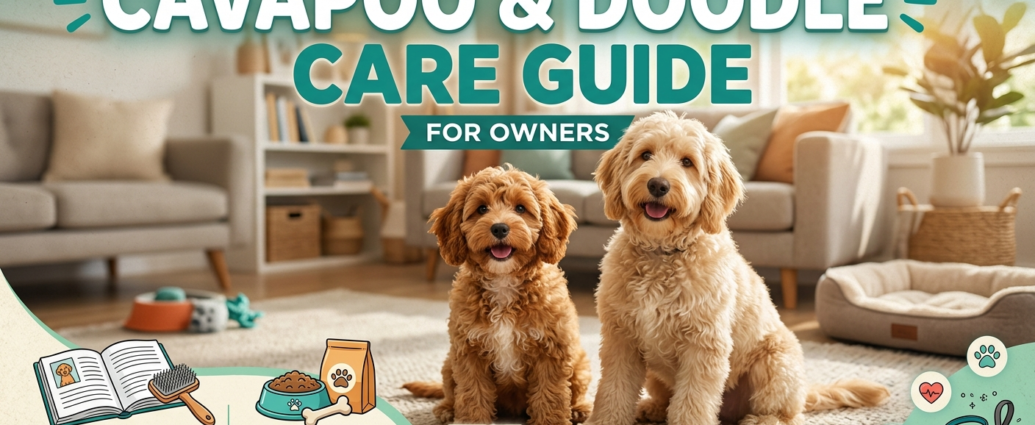
Cavapoo & Doodle Care looks different from caring for a purebred dog, mostly because these hybrid breeds inherit unpredictable combinations of traits from their parent breeds. This guide to Cavapoo & Doodle Care covers the three areas that trip up new owners most often — coat maintenance that varies wildly from dog to dog, diet needs shaped by their mixed genetics, and health traps that come from combining two breeds’ vulnerabilities rather than canceling them out. Whether you have a Cavapoo, a Goldendoodle, a Labradoodle, or another poodle-mix breed, this Cavapoo & Doodle Care guide applies across the board.
Why Doodle Breeds Need Their Own Care Approach
Poodle-mix breeds like Cavapoos, Goldendoodles, and Labradoodles are crossbred specifically for traits like a low-shedding coat and a friendly temperament, but genetics don’t always cooperate predictably. Two puppies from the same litter can end up with completely different coat types, energy levels, and health predispositions. That unpredictability is exactly why Cavapoo & Doodle Care deserves its own dedicated approach rather than generic small- or medium-breed advice — what works for one doodle may not work for another, even within the same litter.
Coat Maintenance: Managing the Unpredictable Doodle Coat
Coat care is often the most surprising part of Cavapoo & Doodle Care for new owners, since doodle coats range from loose curls to nearly straight, and each type has different maintenance demands.
Common coat types and their needs:
- Curly, poodle-like coats shed the least but mat the easiest, requiring brushing every one to two days to prevent painful tangles close to the skin
- Wavy, “fleece” coats are the most common doodle texture and need brushing 3–4 times a week, with special attention to friction zones like behind the ears, armpits, and under the collar
- Straight, more retriever-like coats shed more but mat less, needing brushing roughly twice a week
General coat maintenance practices:
- Schedule professional grooming every 6–8 weeks to manage length and prevent matting from getting out of hand
- Use a slicker brush followed by a metal comb to check for hidden mats close to the skin, not just the visible surface layer
- Bathe every 3–4 weeks with a gentle, moisturizing shampoo, since curly coats can dry out the skin more than typical single coats
- Never shave a matted coat at home without professional guidance — severe matting can hide skin infections underneath
Neglected mats aren’t just a grooming inconvenience; they can trap moisture against the skin and lead to painful, infected hot spots, making coat care a genuine health issue within Cavapoo & Doodle Care.
Diet: Feeding for Mixed Genetics
Diet is another area where Cavapoo & Doodle Care requires some flexibility, since a doodle’s nutritional needs depend heavily on which parent breed’s traits are more dominant.
Key dietary considerations:
- Size-appropriate feeding: A Cavapoo (typically 9–25 lbs) has very different caloric needs than a standard Goldendoodle (50–90 lbs), so always feed based on your specific dog’s adult weight range, not the “doodle” label generally
- Joint-support nutrients: Larger doodle mixes inheriting a Poodle or Retriever’s frame can benefit from diets fortified with glucosamine and omega-3 fatty acids to support joint health as they grow
- Allergy awareness: Poodle-mix breeds have a notably high rate of food sensitivities, so introducing new proteins gradually and watching for itching or digestive upset is worthwhile
- Weight monitoring: Cavapoos in particular are prone to weight gain due to their small size and food motivation, making portion control especially important
- Puppy growth control: For larger doodle mixes, avoid free-feeding or overly rich puppy formulas, since rapid growth can stress developing joints
Because “doodle” isn’t a single standardized breed, working with your vet to set a calorie target based on your dog’s actual size and activity level is more useful than following generic doodle feeding charts.
Common Health Traps in Doodle Breeds
The final piece of Cavapoo & Doodle Care involves understanding that hybrid dogs can inherit health risks from either parent breed — sometimes both.
Health issues to watch for:
- Mitral Valve Disease: A heart condition common in Cavalier King Charles Spaniels that Cavapoos can inherit, making regular cardiac checks important as they age
- Hip and Elbow Dysplasia: Common in larger doodle mixes descended from Retrievers or Standard Poodles, especially in dogs that grow too quickly as puppies
- Progressive Retinal Atrophy (PRA): An inherited eye condition seen in Poodles that can appear in doodle offspring, leading to gradual vision loss
- Ear Infections: Doodle ears are often floppy and covered in hair, trapping moisture and debris more than breeds with cleaner, more open ear canals
Reducing health risks:
- Choose breeders who screen parent dogs for breed-specific conditions like hip dysplasia, PRA, and cardiac issues
- Schedule annual (or twice-yearly for seniors) veterinary exams that include a cardiac listen and eye check
- Clean ears weekly with a vet-approved solution, especially after swimming or baths
- Keep body weight lean throughout life to reduce joint and cardiac strain
A responsible approach to Cavapoo & Doodle Care means researching both parent breeds’ known health risks, not just assuming hybrid vigor eliminates them.
Final Thoughts
Doodle breeds combine charm, intelligence, and often lower-shedding coats, but their mixed genetics mean Cavapoo & Doodle Care requires more individualized attention than owning a single, predictable breed. Understanding your specific dog’s coat type, feeding for their actual size and activity level, and staying alert to inherited health traps from either parent breed together form the foundation of responsible doodle ownership. With consistent care, most Cavapoos and doodles thrive well into their senior years.