Introduction
Cavalier King Charles Spaniel Heart Health is one of the most important topics any owner of this breed can learn about, since Cavaliers have one of the highest rates of heart disease of any dog breed in the world. This guide to Cavalier King Charles Spaniel Heart Health explains why Mitral Valve Disease is so prevalent in the breed, what early detection actually involves, and what owners can do to support their dog’s heart for as long as possible. Whether you already own a Cavalier or are researching before bringing one home, understanding Cavalier King Charles Spaniel Heart Health early can add meaningful years to your dog’s life.
Why Cavaliers Are So Prone to Heart Disease
Mitral Valve Disease (MVD) is remarkably common in Cavalier King Charles Spaniels, with studies estimating that more than half of the breed will show signs of the disease by age five, and nearly all will be affected by age ten. This makes Cavalier King Charles Spaniel Heart Health a genetic reality of the breed rather than a rare complication. The condition is believed to be strongly hereditary, which is why breeding practices and early cardiac screening play such an outsized role in managing the breed’s overall health outlook.
Understanding Mitral Valve Disease
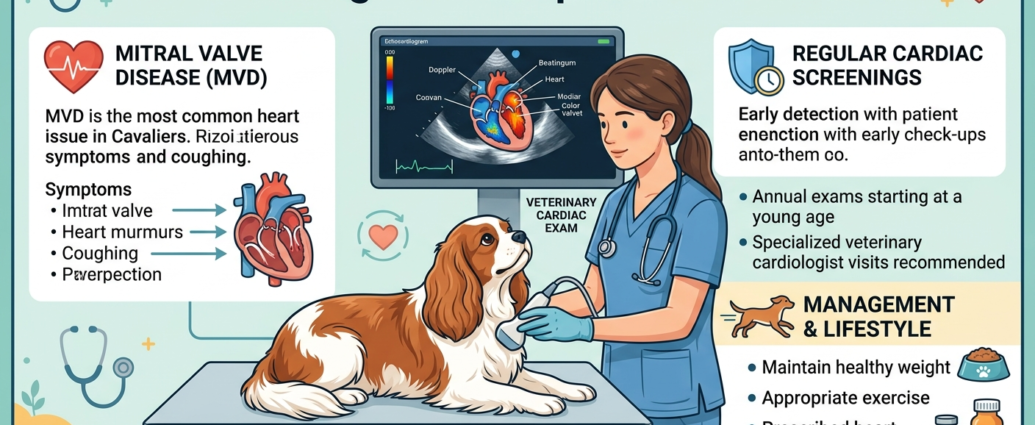
At the center of Cavalier King Charles Spaniel Heart Health is Mitral Valve Disease, a progressive condition in which the valve between the heart’s left atrium and left ventricle deteriorates over time.
How the disease progresses:
- The mitral valve gradually thickens and weakens, causing it to leak instead of closing properly
- This leakage allows blood to flow backward into the atrium, creating a distinctive heart murmur that vets can detect during a physical exam
- Over time, the heart has to work harder to compensate, which can eventually lead to congestive heart failure if left unmanaged
Stages of the disease:
- Early stage: A murmur is detectable, but the dog shows no outward symptoms and heart size remains normal
- Moderate stage: The heart begins to enlarge in response to the leak, though the dog may still appear symptom-free
- Advanced stage: Fluid can begin to accumulate in or around the lungs, leading to visible symptoms and reduced quality of life
Recognizing Early Warning Signs
A major challenge in Cavalier King Charles Spaniel Heart Health is that early Mitral Valve Disease often shows no obvious symptoms at all, which is why proactive screening matters more than watching for visible signs.
Signs that may appear as the disease progresses:
- A persistent cough, especially at night or after lying down
- Reduced energy or reluctance to engage in normal exercise
- Rapid or labored breathing, even at rest
- Fainting spells, particularly during excitement or exertion
- A noticeably distended abdomen in advanced cases, caused by fluid buildup
Because a heart murmur is often the very first detectable sign — appearing well before any visible symptoms — regular veterinary auscultation is the single most valuable early-detection tool available to Cavalier owners.
Detecting Early Mitral Valve Disease
Early detection is the cornerstone of managing Cavalier King Charles Spaniel Heart Health, since catching the disease before symptoms appear allows for earlier intervention and better long-term outcomes.
Recommended screening schedule:
- Annual cardiac auscultation (listening to the heart with a stethoscope) starting as early as one year of age, given the breed’s high risk
- An echocardiogram if a murmur is detected, to assess the severity and stage of valve disease
- More frequent monitoring (every 6–12 months) once a murmur is confirmed, to track progression over time
- Genetic and cardiac screening of breeding dogs, which responsible breeders should already be doing to reduce the disease’s prevalence in future litters
What to expect during screening:
- A basic stethoscope exam can often detect a murmur years before any outward symptoms appear
- Echocardiograms provide a detailed picture of valve function and heart chamber size, helping vets stage the disease accurately
- Blood tests (such as NT-proBNP) can sometimes help assess cardiac stress, complementing physical and imaging findings
Supporting Heart Health Once Diagnosed
Once Mitral Valve Disease is detected, ongoing Cavalier King Charles Spaniel Heart Health management focuses on slowing progression and maintaining quality of life for as long as possible.
Management strategies:
- Medication, such as ACE inhibitors or pimobendan, is often introduced at specific disease stages to reduce strain on the heart and delay progression to heart failure
- Maintaining a lean body weight reduces overall cardiac workload
- Moderate, consistent exercise (rather than intense exertion) is generally encouraged unless a vet advises otherwise based on disease severity
- Regular follow-up appointments allow vets to adjust treatment as the disease progresses
Working closely with a veterinarian — ideally one experienced with cardiology or a veterinary cardiologist for more advanced cases — gives Cavaliers the best chance at a longer, more comfortable life despite this breed-wide vulnerability.
Choosing a Cavalier Responsibly
For prospective owners, supporting long-term Cavalier King Charles Spaniel Heart Health starts before you even bring a puppy home. Look for breeders who screen both parent dogs’ hearts according to established protocols and avoid breeding dogs with early-onset disease. While this doesn’t eliminate risk entirely, given how hereditary MVD is in the breed, it meaningfully improves the odds of a longer heart-healthy life for any puppy produced.
Final Thoughts
Cavalier King Charles Spaniels are affectionate, gentle companions, but their well-documented predisposition to heart disease means Cavalier King Charles Spaniel Heart Health deserves consistent, proactive attention throughout their lives. Understanding how Mitral Valve Disease develops, committing to regular cardiac screening starting early in adulthood, and working closely with a vet once a murmur is detected together give owners the best possible chance of extending their Cavalier’s quality of life.