Introduction
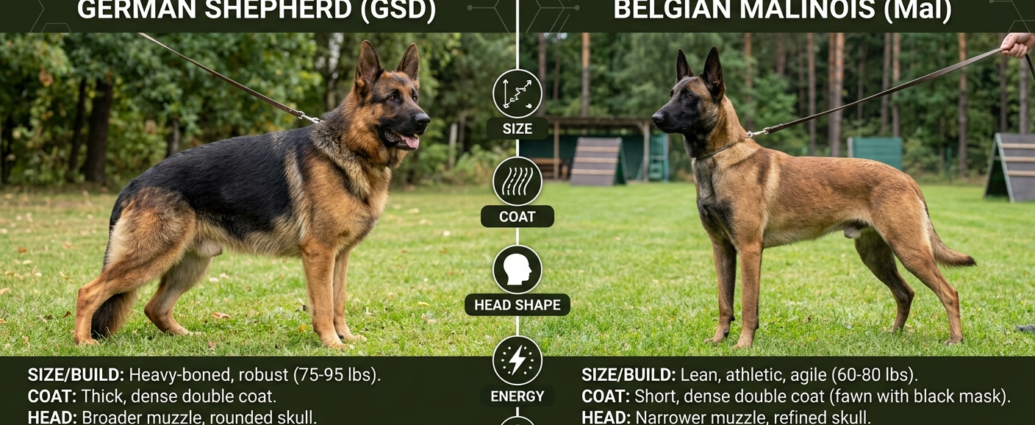
German Shepherd vs. Belgian Malinois is a comparison that comes up constantly among people drawn to working, high-drive dog breeds. For good reason, since both are frequently used in police, military, and protection work and share a reputation for intelligence and intensity. But a closer German Shepherd vs. Belgian Malinois comparison reveals meaningful differences in energy level, trainability, and suitability for everyday family life that matter enormously before bringing either one home. This guide breaks down exactly where these two breeds diverge, so you can choose based on realistic lifestyle fit rather than working-dog reputation alone.
Why These Two Breeds Get Compared So Often
Both German Shepherds and Belgian Malinois are herding-breed descendants prized for intelligence, loyalty, and an exceptional work ethic. Both are used extensively in professional working roles, both are highly trainable, and both form intensely close bonds with their handlers. That overlap is exactly why the German Shepherd vs. Belgian Malinois question comes up so often among first-time owners of high-drive breeds. The similarities on paper can obscure just how different these two dogs are to actually live with day to day.
Energy and Drive: A Critical Difference
Energy level is the single biggest factor in any German Shepherd vs. Belgian Malinois comparison, and it’s often where new owners underestimate what they’re taking on.
German Shepherd energy profile:
- High energy, but generally more capable of settling indoors once needs are met
- Typically needs 60–90 minutes of structured exercise and mental engagement daily
- Energy is intense but more even and predictable across the day
Belgian Malinois energy profile:
- Widely considered one of the most intense working breeds, often exceeding even the German Shepherd in raw drive
- Frequently needs two or more hours of vigorous physical and mental work daily to avoid serious behavioral issues
- Energy can be relentless and less forgiving of inconsistent outlets, especially in dogs from working or sport lines
In a German Shepherd vs. Belgian Malinois comparison, the Malinois is almost universally regarded as the higher-drive, more demanding breed — a factor that disqualifies it as a good fit for the vast majority of average households.
Trainability and Temperament
Both breeds are exceptionally trainable, but the German Shepherd vs. Belgian Malinois comparison shows real differences in how that trainability shows up in daily life.
German Shepherd temperament:
- Confident, loyal, and protective, generally with a more measured, thoughtful approach to new situations
- Well-suited to obedience, family life, and structured work alike
- Tends to be more tolerant of a less experienced handler, provided consistent training is in place
Belgian Malinois temperament:
- Extremely sharp, reactive, and quick to learn, but that same sharpness can translate into heightened sensitivity or intensity in a home setting
- Best suited to experienced handlers who can provide structure, a clear job, and consistent mental engagement
- Can become anxious, obsessive, or destructive without an appropriate outlet for their drive
Anyone weighing German Shepherd vs. Belgian Malinois temperament should be honest about their own experience level — the Malinois’s intensity is a major asset in the right hands and a serious liability in the wrong ones.
Health and Lifespan Considerations
Health differences are less dramatic in the German Shepherd vs. Belgian Malinois comparison than the temperament and energy gaps, but they’re still worth understanding.
German Shepherd health notes:
- Average lifespan of roughly 9–13 years
- Strongly predisposed to hip and elbow dysplasia, along with degenerative myelopathy in older age
- Larger frame means more joint-related wear over a working lifetime
Belgian Malinois health notes:
- Average lifespan of roughly 12–14 years, generally longer than German Shepherds
- Leaner build tends to reduce joint stress compared to the heavier German Shepherd frame
- Still prone to hip dysplasia, though generally at somewhat lower rates than German Shepherds
Overall, Belgian Malinois tend to have a modest health and longevity edge, largely due to their leaner, more athletic build placing less cumulative stress on their joints.
Which Breed Fits Your Home?
The core of the German Shepherd vs. Belgian Malinois decision comes down to one honest question: how much daily structure, exercise, and mental work can you realistically provide? German Shepherds are demanding but generally more forgiving of a typical active household with consistent training. Belgian Malinois are best reserved for experienced owners, working homes, or dog sport enthusiasts who can dedicate serious daily time to structured activity — without that outlet, a Malinois is far more likely to develop anxiety-driven or destructive behavior than a German Shepherd in the same situation.
Consider a German Shepherd if:
- You want a loyal, protective family dog with high but manageable energy
- You have 60–90 minutes daily for exercise and training
- You’re a first-time high-drive breed owner but committed to consistent training
Consider a Belgian Malinois if:
- You have significant experience with working or high-drive breeds
- You can commit two or more hours daily to structured physical and mental work
- You’re involved in dog sports, protection work, or a similarly demanding activity
Final Thoughts
The German Shepherd vs. Belgian Malinois decision isn’t about which breed is more impressive. Both are extraordinary working dogs in the right setting. It’s about matching a breed’s genuine drive level to your actual daily capacity, not your aspirational one. Choosing honestly here, rather than being drawn in by a breed’s reputation, is what determines whether you end up with a thriving companion or an overwhelmed, under-stimulated dog.