Introduction
French Bulldog vs. Boston Terrier is one of the most common comparisons prospective owners search for, and it’s easy to see why both are compact, affectionate, flat-faced companion breeds that get mistaken for each other at the dog park. But beneath the surface similarities, a French Bulldog vs. Boston Terrier comparison reveals real differences in health risks, temperament, and day-to-day care that matter a great deal when choosing between them. This guide breaks down exactly where these two breeds diverge, so you can decide which one actually fits your lifestyle rather than picking based on looks alone.
Physical Similarities That Cause Confusion
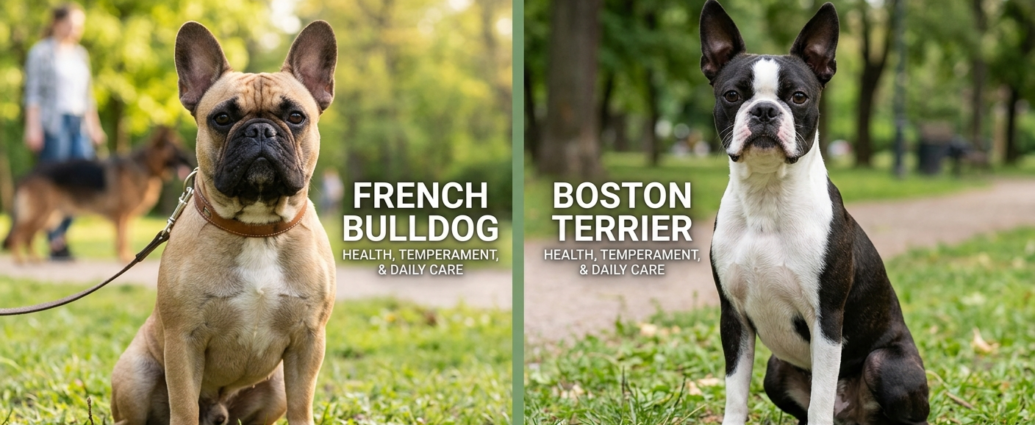
Before getting into the differences, it’s worth understanding why the French Bulldog vs. Boston Terrier debate exists in the first place. Both breeds share a compact, muscular build, large upright ears, a short coat, and a flattened (brachycephalic) face. Both are small enough for apartment living and were popular companion breeds in the same general era. That said, Boston Terriers are typically leaner and slightly taller, with a more defined “tuxedo” black-and-white coat pattern, while French Bulldogs are stockier with a wider range of coat colors and their signature “bat ears.”
Health Differences: Not All Flat-Faced Breeds Are Equal
Health is where the French Bulldog vs. Boston Terrier comparison matters most, since both breeds are brachycephalic but carry different degrees of risk.
French Bulldog health risks:
- More pronounced airway restriction (BOAS) due to a shorter, wider skull structure
- Higher rates of skin fold infections from their heavier wrinkling
- Elevated risk of spinal issues, including Intervertebral Disc Disease, due to their compact torso
- Greater difficulty regulating body temperature, making heat intolerance a significant concern
Boston Terrier health risks:
- Also prone to BOAS, but generally to a lesser degree given a comparatively longer muzzle
- Higher rate of eye problems, including corneal ulcers and cataracts, due to their prominent, exposed eyes
- Predisposition to patellar luxation (kneecap dislocation) more than spinal disc disease
- Generally considered to have a slightly longer average lifespan than French Bulldogs
In a French Bulldog vs. Boston Terrier health comparison, Boston Terriers are often considered the marginally hardier breed overall, though both require a vet familiar with brachycephalic care and neither should be treated as a low-maintenance companion.
Temperament Differences
Temperament is another area where the French Bulldog vs. Boston Terrier choice comes down to personal fit rather than one breed being objectively better.
French Bulldog temperament:
- Calm, affectionate, and often described as “clownish” in short bursts of playfulness
- Lower exercise drive, content with short walks and plenty of couch time
- Can be stubborn during training, requiring patience and consistency
- Tends to form a strong bond with one or two family members
Boston Terrier temperament:
- Energetic, sociable, and typically eager to please, which often makes training somewhat easier
- Higher activity needs than a Frenchie, enjoying more active play and longer walks
- Generally more adaptable with strangers and other dogs, reflecting their historic role as a sociable companion breed
- Tends to be slightly more vocal and expressive
If daily activity level is a deciding factor, Boston Terriers generally suit more active households, while French Bulldogs fit well with owners looking for a lower-energy companion.
Care and Maintenance Differences
Day-to-day care is the final piece of the French Bulldog vs. Boston Terrier decision, and while both are relatively low-maintenance compared to long-coated breeds, their specific needs differ.
French Bulldog care needs:
- Frequent facial fold cleaning to prevent skin infections
- Strict heat avoidance during exercise, given their more severe airway restriction
- Weight management is critical, since excess weight significantly worsens their breathing difficulties
- Generally lower grooming needs due to their smooth, short coat
Boston Terrier care needs:
- Regular eye checks and gentle cleaning around the eyes to prevent irritation or injury
- More consistent daily exercise to match their higher energy level
- Nail and dental care are standard, without the intensive fold-cleaning Frenchies require
- Also short-coated and low-shedding, making grooming straightforward for both breeds
Both breeds benefit from a harness rather than a neck collar, given their shared airway sensitivity, and both do best with owners who understand brachycephalic-specific care rather than treating them like a typical low-maintenance small breed.
Which Breed Is Right for You?
Choosing between a French Bulldog vs. Boston Terrier ultimately comes down to activity level, health risk tolerance, and grooming preferences. If you want a calm, low-energy companion who’s happy on the couch and don’t mind diligent skin fold care, a French Bulldog may be the better fit. If you want a slightly more active, sociable dog with fewer skin-related maintenance tasks and marginally lower average health risks, a Boston Terrier could suit your household better. Both breeds require an owner committed to brachycephalic-aware veterinary care, regardless of which one you choose.
Final Thoughts
The French Bulldog vs. Boston Terrier decision isn’t about which breed is “better”, it’s about which set of health considerations, temperament traits, and care routines fits your lifestyle. Both are loving, compact companion breeds capable of thriving in the right home, but understanding their differences upfront helps set realistic expectations before you bring one home, rather than discovering the gaps after the fact.