Introduction
Understanding Great Dane Health Risks is essential before bringing home one of the world’s largest dog breeds, since their sheer size creates health vulnerabilities that smaller breeds like Chihuahua, Cavapoo or Doodle etc, simply don’t face. This guide to Great Dane Health Risks covers the three concerns that matter most. Bloat, a life-threatening emergency the breed is especially prone to, heart disease, and the unique dangers of managing rapid growth in giant-breed puppies. Whether you’re raising a Great Dane puppy or caring for an adult, understanding these Great Dane Health Risks upfront can genuinely save your dog’s life.
Why Giant Breeds Face Unique Health Challenges
Great Danes carry a combination of traits — a deep, narrow chest, rapid early growth, and sheer body mass — that together create some of the most serious Great Dane Health Risks of any breed. Their average lifespan of just 7–10 years is itself a reflection of how much strain their size places on the heart, joints, and digestive system. Responsible ownership means understanding these risks specifically, rather than applying generic large-breed advice that doesn’t account for just how extreme a Great Dane’s proportions really are.
Bloat: The Most Urgent of the Great Dane Health Risks
Among all Great Dane Health Risks, bloat — technically called Gastric Dilatation-Volvulus (GDV) — is the most immediately life-threatening, and Great Danes have one of the highest incidence rates of any breed.
What happens during bloat:
- The stomach fills with gas and rapidly expands
- In the more severe form (volvulus), the stomach twists on itself, cutting off blood supply and trapping gas and food
- Without emergency surgery within hours, bloat is frequently fatal
Warning signs requiring immediate emergency care:
- A visibly swollen or distended abdomen
- Unproductive retching (attempting to vomit without bringing anything up)
- Restlessness, pacing, or obvious distress
- Rapid breathing or drooling
Prevention strategies:
- Feed two or three smaller meals daily instead of one large meal
- Avoid vigorous exercise for at least an hour before and after eating
- Use a slow-feeder bowl to reduce the speed of eating and air intake
- Discuss a preventive gastropexy (surgically securing the stomach) with your vet, often performed during spay or neuter surgery, since it significantly reduces the risk of the stomach twisting
Because bloat can escalate from first symptoms to a life-threatening emergency within a couple of hours, any suspected case should mean an immediate trip to the emergency vet rather than a wait-and-see approach.
Heart Disease: A Significant Great Dane Health Risk
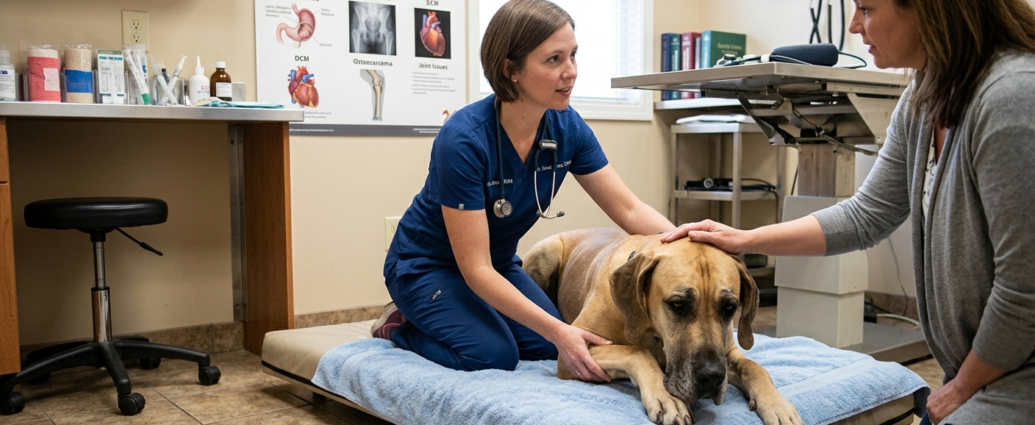
Cardiac issues rank among the most serious Great Dane Health Risks, with Dilated Cardiomyopathy (DCM) being the condition owners should be most aware of.
Understanding DCM in Great Danes:
- DCM causes the heart muscle to weaken and the chambers to enlarge, reducing the heart’s ability to pump blood effectively
- Great Danes have one of the highest breed-specific rates of DCM, making it a leading cause of death in the breed
- Early stages often show no obvious symptoms, which is why proactive screening matters more than waiting for visible signs
Signs of heart disease to watch for:
- Reduced exercise tolerance or unusual fatigue
- Coughing, particularly at night or after lying down
- Labored breathing or a rapid resting respiratory rate
- Fainting or collapse in more advanced cases
Management and prevention strategies:
- Schedule regular cardiac screening, including echocardiograms, starting in early adulthood rather than waiting for symptoms
- Discuss diet carefully with your vet, since certain grain-free formulas have been associated with an increased DCM risk in some breeds
- Report any new coughing, fatigue, or breathing changes promptly, since early treatment significantly improves outcomes
Fast Growth: Managing a Giant Breed Puppy Safely
The third major category of Great Dane Health Risks involves growth itself — Great Danes can gain over 100 pounds in their first year, and how that growth is managed has lasting consequences for joint and skeletal health.
Risks of uncontrolled fast growth:
- Overly rapid growth increases the risk of hip and elbow dysplasia
- Excess calories and calcium during puppyhood can contribute to skeletal deformities like Hip Osteodystrophy (HOD)
- High-impact activity on developing joints raises the risk of permanent injury
Safe growth management strategies:
- Feed a large-breed-specific puppy formula, which is calibrated for slower, more controlled growth rather than rapid weight gain
- Avoid free-feeding, and follow portion guidelines based on your vet’s growth-tracking recommendations
- Limit high-impact exercise like jumping, long runs, or rough play with other dogs until growth plates close, typically around 18–24 months for giant breeds
- Favor short, frequent walks over long or intense exercise sessions throughout the first two years
Because the consequences of mismanaged growth (joint damage, skeletal deformity) are often permanent, this is one of the areas where prevention during puppyhood matters more than almost any other stage of a Great Dane’s life.
Building a Complete Health Monitoring Routine
Managing these Great Dane Health Risks effectively means combining several habits: feeding smaller, frequent meals to reduce bloat risk, scheduling proactive cardiac screening rather than waiting for symptoms, and following a controlled growth plan throughout puppyhood. Twice-yearly veterinary visits, rather than the standard annual checkup, are generally recommended for this breed given how quickly serious conditions like bloat and DCM can progress.
Final Thoughts
Great Danes are gentle, affectionate giants, but their size brings genuine health vulnerabilities that require proactive, breed-specific attention. Understanding these Great Dane Health Risks — recognizing the emergency signs of bloat, staying ahead of heart disease through regular screening, and managing growth carefully during puppyhood — gives owners the best chance of helping their Great Dane live a full, comfortable life despite the breed’s shorter average lifespan.