Master the Fundamentals of Dog Emergency and Safety
Unexpected injuries and sudden health crises can happen in the blink of an eye. Knowing proper dog emergency and safety procedures allows pet owners to act decisively during critical moments before professional veterinary care is available. Dogs are high-energy animals that frequently run into outdoor hazards, consume unfamiliar objects, or engage in rough play. When an accidental injury or acute illness strikes, taking systematic dog emergency and safety steps stabilizes your pet, minimizes pain, and drastically improves overall recovery outcomes.
Spotting Red-Flag Symptoms in Canines
Recognizing early indicators of distress is crucial for timely medical care. You should prioritize an emergency vet visit immediately if your canine companion displays any of these severe signs:
- Pale or Blue Gums: Indicates severe shock, internal bleeding, or lack of oxygen.
- Inability to Urinate or Defecate: Signals severe urinary blockages or intestinal impactions.
- Seizures and Collapse: Often caused by neurological damage, toxins, or severe metabolic imbalances.
- Persistent Retching without Vomiting: A hallmark symptom of Gastric Dilation-Volvulus (GDV or Bloat), which requires immediate surgery.
- Severe Physical Trauma: Any hit-by-car incident, fall from height, or deep animal bite.
Tactical First Aid Measures for Dogs
When faced with an acute dog emergency and safety event at home or outdoors, immediate physical stabilization is paramount.
Triage for Sudden Hemorrhage
If your dog suffers a laceration, press clean cotton gauze or a clean cloth directly onto the wound. Apply continuous, steady pressure for at least five minutes. Do not remove the bandage to inspect the wound prematurely, as this breaks forming blood clots. Layer additional gauze directly over saturated pads if bleeding continues.
Treating Heatstroke and Hyperthermia
During hot summer months, heat exhaustion can turn fatal rapidly. Move your dog into an air-conditioned room or shade immediately. Apply lukewarm or cool water to their paws, belly, and inner thighs. Avoid ice water, which causes blood vessels to constrict and traps heat internally.
Practical Canine First Aid Tips for Choking
If your dog displays choking signs, open their jaws carefully to check for foreign obstructions like balls or sticks. Applying practical canine first aid tips such as sweeping the mouth gently with your finger can dislodge the item, but exercise caution so you do not push objects deeper or get bitten.
Preparing for an Urgent Veterinary Visit
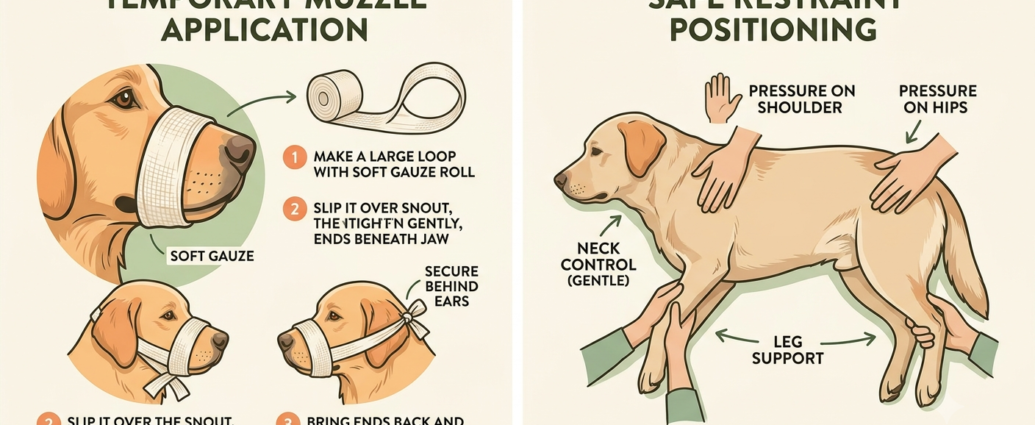
Transporting a suffering dog requires extreme care to prevent secondary injury and protect yourself from defensive bites. Correct muzzling and restraint are foundational to dog emergency and safety, as even the friendliest dog may bite when in extreme pain.
- Use a Temporary Muzzle: (See visual guide above). Even the gentlest dog may bite when experiencing intense pain. Wrap a strip of gauze or soft cloth around the snout before lifting them.
- Stabilize the Spine: If you suspect spinal trauma or bone fractures, slide a rigid board, plywood sheet, or firm blanket under your dog to create an improvised stretcher.
- Call Ahead: Notify the clinic while en route so the medical team can prepare oxygen, fluids, and surgical suites prior to your arrival.
Preventive Practices for Home and Yard
Building long-term dog emergency and safety habits reduces hospital visits. Store lawn fertilizers, rodent poisons, human pain relievers, and foods containing xylitol high above ground level. Regularly review actionable canine first aid tips with family members and post emergency contact numbers near your door. Combining preventative home sweeps with solid dog emergency and safety knowledge provides the best defense for your dog’s well-being.