The Importance of Cat Emergency and Safety Awareness
Understanding the principles of cat emergency and safety is vital for maintaining your feline companion’s health. Cats are stoic creatures that naturally mask symptoms of physical distress to protect themselves from potential predators. Consequently, by the time a feline demonstrates visible pain, an underlying medical issue has often reached an advanced stage. Implementing proactive cat emergency and safety strategies allows cat parents to recognize subtle physiological shifts early and deliver critical intervention before seeking professional care.
Identifying Silent Indicators of Feline Distress
Because cats conceal discomfort, identifying critical warning signs forms the foundation of feline emergency care. Seek immediate medical evaluation if your cat exhibits any of the following symptoms:
- Straining in the Litter Box: Frequent, painful attempts to urinate with little or no output signal a life-threatening urethral obstruction.
- Open-Mouth Breathing: Respiratory distress or rapid panting in cats indicates severe pulmonary or cardiovascular compromise.
- Sudden Posterior Weakness: Inability to move the hind legs accompanied by crying out points to an aortic thromboembolism (saddle thrombus).
- Ingestion of Toxic Plants: Exposure to any part of true lilies, including pollen or vase water, causes acute kidney collapse.
- Hypothermia or Cold Paws: Cold extremities combined with extreme lethargy signal circulatory shock.
Immediate First Aid for Common Feline Crises
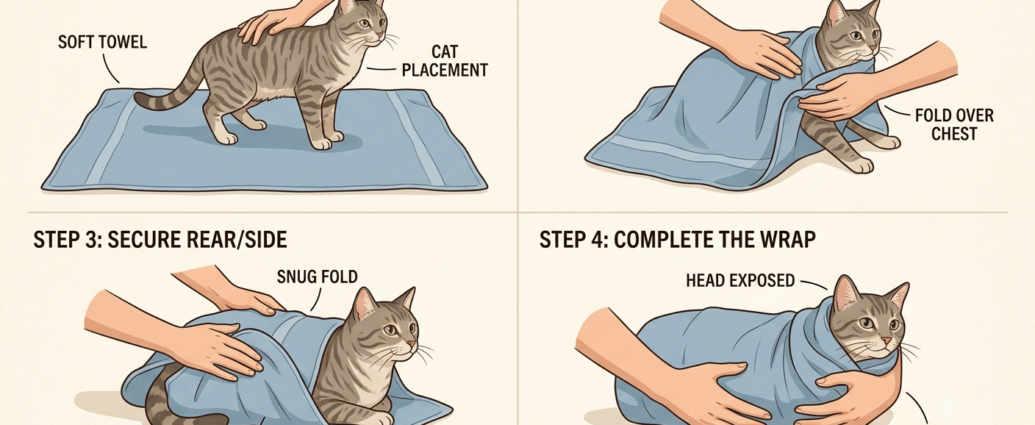
Executing accurate first aid during a cat emergency and safety situation helps stabilize your pet’s condition during transport. Handling an injured cat requires special techniques to avoid injury to the handler and the pet. A crucial cat emergency and safety technique is the towel wrap, or “cat burrito,” which safely secures a cat’s limbs while leaving the head accessible for assessment.
Managing Accidental Poisoning
Feline liver enzymes metabolize toxins differently than humans or dogs. If your cat contacts household cleaners, essential oils, or toxic flora, do not induce vomiting at home. Inducing emesis can cause severe esophageal burns or aspiration pneumonia. Instead, wipe toxic residues off paws to prevent self-grooming and seek feline emergency care immediately.
Executing a Safe Cat Trauma Response
In scenarios involving high-rise falls or vehicle collisions, a calm cat trauma response prevents further injury. Minimize handling and wrap the cat loosely in a thick towel. This restrains struggling, keeps body heat stable, and protects caregivers from instinctual bites or scratches.
Treating Surface Burns and Eye Injuries
If liquid chemicals splash into your cat’s eyes or skin, flush the area with clean saline solution or tepid water for at least five minutes. Never apply home remedies, ointments, or butter to thermal or chemical burns.
Safe Transport Practices During Crises
A structured cat trauma response involves secure handling during transport. Safe and calm cat emergency and safety transport often utilizes proper restraint (like the towel wrap shown above). Place your wrapped cat gently into a top-loading, hard-sided carrier lined with familiar bedding. Secure the carrier with a seatbelt inside your vehicle to prevent jostling, and keep climate control warm to combat shock.
Building a Custom Feline First Aid Kit
Every household should keep a dedicated kit for any cat emergency and safety incident. Essential items include:
- A thick fleece blanket or large plush towel for safe restraint.
- Sterile saline eyewash solution and non-stick gauze pads.
- Self-adhering elastic bandages (Vet Wrap).
- Digital rectal thermometer and petroleum jelly.
- Pet-safe tweezers and bandage scissors.
Proactive Home Safeguards
Preventive environmental management eliminates most household risks. Secure window screens, cover electrical cords, keep string and hair ties out of reach, and remove all toxic houseplants. By pairing environmental controls with reliable cat emergency and safety knowledge, you create a protected environment where your cat can thrive safely.