If you’ve ever come home late and found your dog staring accusingly at an empty bowl, you already understand the appeal of a smart pet feeder. These devices have moved well beyond the simple timer-based dispensers of a decade ago. Today’s models connect to your phone, track eating habits, portion meals to the gram, and even let you talk to your pet through a built-in speaker. In this review, we’ll walk through what a modern smart pet feeder actually does, who benefits most from one, and what to look for before you buy.
What Is a Smart Pet Feeder?
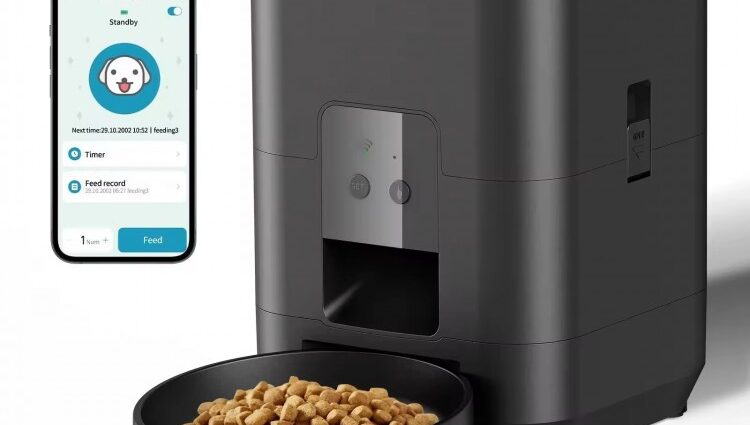
At its core, a smart pet feeder is an app-connected device that dispenses a set amount of food at scheduled times. Unlike a basic automatic pet feeder with a mechanical dial, smart versions add Wi-Fi connectivity, portion tracking, and remote control. Most let you set up multiple feeding times per day, adjust portion sizes on the fly, and receive a notification when food is running low or when a meal has been dispensed.
Many higher-end feeders also include a camera and two-way audio, so you can watch your pet eat and speak to them from work. Some integrate with health-tracking ecosystems, logging how much your pet eats over time — useful data to bring to your vet if you notice appetite changes.
Why Pet Owners Are Switching to Smart Feeders
The biggest draw of a smart pet feeder is consistency. Pets, especially cats, do well with predictable feeding schedules, and a connected feeder removes the guesswork of “did I already feed her this morning?” For multi-pet households, some models even use microchip or collar-tag recognition to make sure the right animal eats from the right bowl — genuinely useful if you have one pet on a prescription diet.
Portion control is the other major benefit. Obesity is one of the most common preventable health issues vets see in dogs and cats, and a smart pet feeder that dispenses precise, pre-programmed amounts makes overfeeding much harder. Compare that to a standard automatic pet feeder, which often only offers rough portion settings without any tracking or accountability.
Key Features to Look For
When comparing smart feeder models, a few features consistently separate the good from the mediocre:
App reliability. A smart pet feeder is only as good as its app. Look for reviews that specifically mention app stability, since a feeder that misses scheduled dispenses because of connectivity issues defeats the purpose.
Portion accuracy. Some feeders dispense by volume (cups), others by weight (grams), which tends to be more precise — important if your vet has prescribed a specific daily intake.
Battery backup. Power outages happen. A good automatic pet feeder should have a battery backup option so a scheduled meal isn’t skipped.
Hopper capacity and food compatibility. Check that the feeder can handle your kibble size, and that the hopper is large enough that you’re not refilling daily.
Easy cleaning. Look for a removable bowl and hopper lid — food residue in a smart pet feeder can attract pests or spoil, especially in humid climates.
Pros and Cons of Smart Pet Feeders
Pros:
- Consistent, scheduled feeding even when you’re not home
- Portion control supports healthy weight management
- Remote monitoring via camera and app (on higher-end models)
- Useful eating-pattern data to share with your veterinarian
- Reduces begging behavior tied to inconsistent feeding times
Cons:
- Higher upfront cost than a basic automatic pet feeder
- Dependent on Wi-Fi and app updates functioning properly
- Some models are noisy when dispensing, which can startle nervous pets
- Not ideal as the sole feeding method for pets with medical conditions requiring close supervision
Who Should Buy One?
A smart pet feeder makes the most sense for pet owners with irregular schedules, multi-pet households needing separate portions, or anyone managing a pet’s weight under veterinary guidance. If you’re simply looking for something to dispense food once a day while you’re at work, a simpler automatic pet feeder without app connectivity may be perfectly sufficient and considerably cheaper.
For households where feeding consistency, health tracking, or remote pet monitoring matter, though, the extra investment in a connected smart pet feeder tends to pay off quickly — both in convenience and in peace of mind.
Buying Tips
Before purchasing, measure your pet’s current daily food intake so you can set accurate portions from day one. Read the manufacturer’s guidance on food type — some feeders struggle with very small kibble or semi-moist food, which can jam the dispensing mechanism. Finally, check the warranty and customer support reputation; a smart pet feeder is a device you’ll rely on daily, so support quality matters if something goes wrong.
Final Verdict
A quality smart pet feeder isn’t just a convenience gadget — it’s a practical tool for portion control, routine, and peace of mind, particularly for multi-pet homes or pets on a vet-recommended diet. If your budget allows, prioritize models with weight-based dispensing and battery backup over flashier features like built-in cameras. Whichever automatic pet feeder you choose, the goal is the same: reliable, healthy feeding, even when life gets busy.