Introduction
Doberman Pinscher Health Tracking is one of the most important habits any owner of this breed can build, since Dobermans carry a genetic predisposition to serious heart disease that often shows no symptoms until it’s advanced. This guide to Doberman Pinscher Health Tracking explains why cardiac screening matters so much for this breed, what genetic testing can reveal, and how to build a monitoring routine that catches problems early enough to act on them. Whether you already own a Doberman or are researching before bringing one home, consistent Doberman Pinscher Health Tracking can make a measurable difference in how long and how well your dog lives.
Why Dobermans Require Dedicated Health Monitoring
Dobermans are athletic, loyal, and highly trainable, but the breed carries one of the highest rates of Dilated Cardiomyopathy (DCM) of any dog breed, alongside a bleeding disorder called von Willebrand’s Disease. This combination is exactly why Doberman Pinscher Health Tracking needs to be more proactive and structured than the care routine for an average breed. Unlike conditions that show clear early symptoms, Doberman heart disease frequently progresses silently, which means the only reliable way to catch it early is through scheduled testing rather than watching for visible signs.
Understanding Dilated Cardiomyopathy in Dobermans
At the center of any serious Doberman Pinscher Health Tracking program is Dilated Cardiomyopathy, a disease in which the heart muscle weakens and the chambers enlarge, reducing the heart’s ability to pump blood effectively.
Why Dobermans are especially at risk:
- Studies estimate a significant percentage of Dobermans will develop DCM at some point in their lives, one of the highest rates recorded across breeds
- The disease is strongly genetic, with specific gene mutations identified as contributing factors in Doberman-specific research
- DCM in Dobermans often has an “occult” (hidden) phase that can last one to two years with no outward symptoms at all
Symptoms once the disease progresses:
- Fatigue or reduced exercise tolerance
- Fainting spells, especially during excitement or exertion
- Coughing, particularly at night
- Labored breathing or a rapid resting respiratory rate
- Sudden collapse, which can occur without warning in advanced or undiagnosed cases
Because the occult phase produces no visible symptoms, relying on how a Doberman “looks” or “acts” is not a reliable way to catch this disease — structured screening is the only dependable option.
Building a Doberman Pinscher Health Tracking Screening Schedule
Consistent Doberman Pinscher Health Tracking relies on a specific, breed-informed testing schedule rather than standard annual checkups alone.
Recommended screening tools:
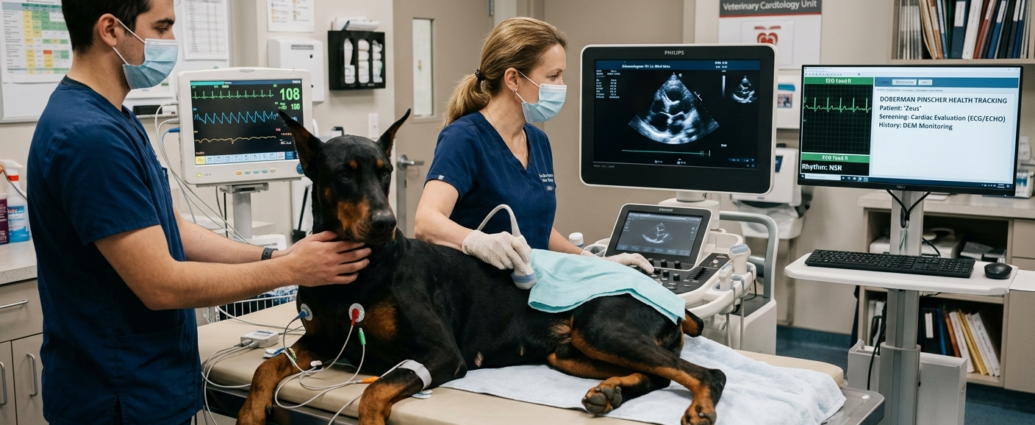
- Echocardiogram: The gold-standard test for detecting DCM, typically recommended annually starting around age two to three, since occult DCM most often develops in early-to-middle adulthood
- Holter monitor: A 24-hour heart rhythm recording that can detect dangerous arrhythmias even when a standard exam appears normal, recommended annually alongside echocardiograms for at-risk breeds like Dobermans
- NT-proBNP blood test: A biomarker test that can indicate cardiac stress, sometimes used as a supplementary screening tool between more comprehensive exams
- Genetic testing: DNA tests for known DCM-associated mutations can help identify at-risk individuals, particularly useful for breeding decisions
Suggested testing frequency:
- Baseline echocardiogram and Holter monitoring starting at age two
- Annual re-testing through middle age, since DCM risk increases significantly as Dobermans get older
- More frequent monitoring (every 6 months) if any abnormality is detected on an earlier test
Genetic Screenings Beyond Heart Disease
While cardiac issues are the most urgent focus of Doberman Pinscher Health Tracking, genetic screening for other hereditary conditions rounds out a complete health monitoring plan.
Other conditions worth screening for:
- Von Willebrand’s Disease: An inherited bleeding disorder common in the breed, identifiable through a simple blood test before any surgery or major procedure
- Wobbler Syndrome: A spinal condition affecting the neck vertebrae, more common in larger, older Dobermans, which can be assessed through imaging if symptoms like neck pain or an unsteady gait appear
- Hypothyroidism: A relatively common endocrine condition that can be identified through routine bloodwork and managed effectively with medication once diagnosed
Working with a veterinarian to build a testing panel that covers both cardiac and non-cardiac genetic risks gives owners a much fuller picture than heart screening alone.
What to Do If Screening Reveals a Problem
If Doberman Pinscher Health Tracking uncovers early signs of DCM or another condition, early intervention meaningfully changes the outlook. Medications such as pimobendan have been shown to delay the onset of clinical heart failure when started during the occult phase, making early detection genuinely actionable rather than just informative. Your veterinarian, ideally in consultation with a veterinary cardiologist, can build a monitoring and treatment plan tailored to your dog’s specific test results.
Building Screening Into Your Doberman’s Routine
Practically speaking, effective Doberman Pinscher Health Tracking means treating cardiac and genetic screening as a standard part of ownership rather than an optional add-on. Budgeting for annual echocardiograms and Holter monitoring from age two onward, keeping records of all test results to track trends over time, and staying in close contact with a vet familiar with breed-specific risks together form a realistic, sustainable approach.
Final Thoughts
Dobermans are intelligent, devoted, and physically capable dogs, but their genetic predisposition to silent heart disease means proactive monitoring isn’t optional — it’s essential. Committing to consistent Doberman Pinscher Health Tracking through scheduled echocardiograms, Holter monitoring, and genetic screening gives owners the best possible chance of catching serious conditions early enough to make a real difference in their dog’s quality of life and longevity.