Introduction
A well-structured Border Collie Activity Plan is essential for this breed, since Border Collies are widely considered the most intelligent dog breed and simply do not thrive on physical exercise alone. This guide to a Border Collie Activity Plan covers the daily mental workouts this breed genuinely needs, how under-stimulation leads directly to anxiety and destructive behavior, and how to build a sustainable routine that keeps both body and mind satisfied. Whether you’re raising a Border Collie puppy or adjusting the routine for an adult dog, this Border Collie Activity Plan gives you a realistic, practical framework to follow.
Why Border Collies Need More Than Just Exercise
Border Collies were bred for herding work that demands constant problem-solving, split-second decision-making, and sustained focus over long working days. That heritage is exactly why a generic exercise routine falls short — a proper Border Collie Activity Plan has to address mental engagement as seriously as physical activity. A Border Collie that gets an hour of running but no mental challenge is still an under-stimulated dog, and that gap is where most behavioral problems in this breed actually originate.
The Link Between Under-Stimulation and Anxiety
Understanding this connection is central to any effective Border Collie Activity Plan, since anxiety in this breed is very often a symptom of unmet mental needs rather than a standalone issue.
Signs of under-stimulation-driven anxiety:
- Obsessive behaviors, such as fixating on shadows, lights, or repetitive movement
- Excessive barking, pacing, or an inability to settle
- Destructive chewing or digging, especially when left alone
- Compulsive herding behavior directed at children, other pets, or moving objects
- Hyper-vigilance or an exaggerated startle response to normal household activity
Why physical exercise alone doesn’t solve it:
- Running or fetch burns energy but doesn’t fully engage the problem-solving instincts bred into the breed
- Over-exercising without mental work can actually build stamina faster than it resolves anxiety, creating a cycle where the dog needs even more physical activity to feel settled
- True satisfaction for a Border Collie comes from “having a job,” not simply expending energy
Building a Daily Border Collie Activity Plan
A complete Border Collie Activity Plan balances physical exercise, structured mental work, and calm downtime, rather than focusing on any single element alone.
Morning: Physical exercise
- 30–45 minutes of active exercise — running, fetch, or a brisk walk — to take the initial edge off excess energy before mental work begins
- Off-leash time in a secure area is ideal if available, allowing natural movement patterns
Midday: Structured mental work
- 15–20 minutes of obedience training, focusing on new commands or refining existing ones, which taps directly into the breed’s problem-solving drive
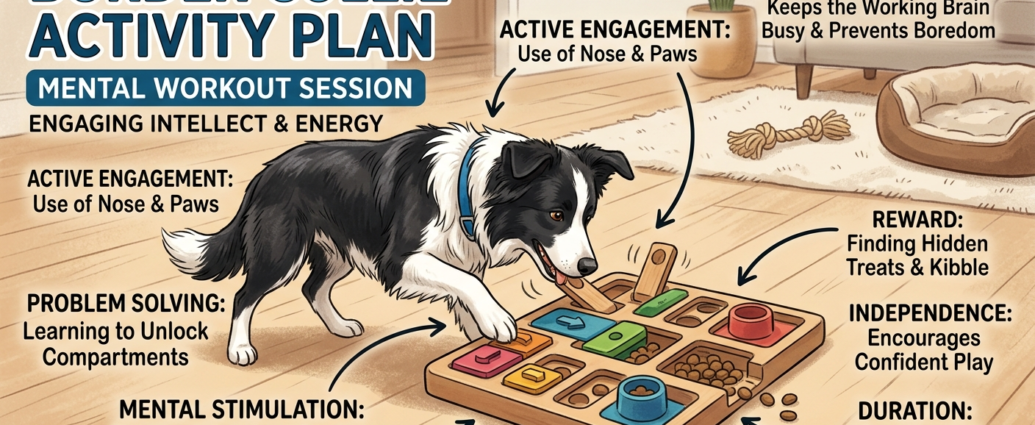
- Puzzle feeders or snuffle mats at mealtime, turning a routine activity into a mental challenge
- Scent work games, such as hiding treats around the house or yard for your dog to find
Afternoon or evening: Herding-instinct outlets
- Treibball (herding large balls into a goal) or flyball, which channel herding instincts into a structured, appropriate activity
- Advanced trick training or agility-style obstacle courses set up in a yard or open space
- Interactive toys that require sustained problem-solving, rotated regularly to prevent boredom from repetition
Throughout the day: Downtime and decompression
- Scheduled rest periods in a calm space, since constant stimulation without downtime can be just as problematic as too little
- A “settle” or “place” command practiced regularly, teaching the dog to relax on cue rather than remaining in a constant state of alertness
Adjusting the Plan by Life Stage
A realistic Border Collie Activity Plan should shift as a dog ages. Puppies need shorter, more frequent sessions of both physical and mental activity, since their attention span and joints are still developing — avoid high-impact exercise like repeated jumping until growth plates close. Adult Border Collies in their prime benefit most from the full daily structure outlined above, ideally including at least one dedicated “job” like agility, herding trials, or advanced obedience work. Senior Border Collies still need mental engagement, even as physical exercise scales back, since cognitive stimulation remains important for both mood and mental sharpness later in life.
Signs Your Activity Plan Needs Adjusting
Even a well-designed Border Collie Activity Plan sometimes needs recalibration. If anxious behaviors persist despite consistent exercise and mental work, consider whether the type of stimulation matches your dog’s specific drive — some Border Collies respond better to herding-style outlets, while others thrive more on scent work or advanced obedience. Consulting a professional trainer experienced with working breeds can help fine-tune a plan that isn’t producing the expected results, and a veterinary behaviorist may be worth involving if anxiety appears severe or persistent despite a solid routine.
Final Thoughts
Border Collies are extraordinary, deeply intelligent companions, but that same intelligence means their needs go well beyond a daily walk. Following a structured Border Collie Activity Plan that combines physical exercise, dedicated mental workouts, and intentional downtime gives owners a realistic path to preventing the anxiety and destructive behaviors so common in under-stimulated dogs of this breed. With the right daily structure, Border Collies can channel their remarkable drive into a calm, confident, and deeply satisfying companionship.