Introduction
Maine Coon Heart Health deserves serious attention from every owner of this beloved breed, since Maine Coons have one of the highest rates of Hypertrophic Cardiomyopathy (HCM) of any cat breed, with a known genetic mutation directly linked to the condition. This guide to Maine Coon Heart Health explains what HCM actually is, why proactive screening matters so much for this specific breed, and what ongoing cardiac care looks like for cats diagnosed with the condition. Whether you already own a Maine Coon or are researching before bringing one home, understanding Maine Coon Heart Health can meaningfully influence how long and how comfortably your cat lives.
Why Maine Coons Are Especially Prone to Heart Disease
Hypertrophic Cardiomyopathy is the most common heart disease in cats generally, but Maine Coon Heart Health is a particular concern because researchers have identified a specific genetic mutation in the breed strongly associated with HCM development. This mutation affects a protein involved in heart muscle contraction, leading to abnormal thickening of the heart’s left ventricle over time. Because the mutation is hereditary, it can be passed from parent to offspring, making genetic awareness and screening especially important for anyone breeding or purchasing a Maine Coon.
Understanding Hypertrophic Cardiomyopathy
At the center of Maine Coon Heart Health is Hypertrophic Cardiomyopathy, a progressive disease in which the heart’s left ventricular wall thickens abnormally, reducing the heart’s ability to relax and fill with blood properly between beats.
How HCM affects the heart:
- Thickened heart muscle reduces the ventricle’s internal chamber size, limiting how much blood the heart can hold and pump with each beat
- Over time, this can lead to an enlarged left atrium as blood backs up, increasing the risk of blood clots and congestive heart failure
- Severity varies widely — some cats live full lives with mild, stable HCM, while others progress to serious complications
Symptoms of HCM to watch for:
- Labored or rapid breathing, sometimes with open-mouth breathing
- Lethargy or reduced activity level
- Loss of appetite
- Sudden hind-limb weakness or paralysis, which can indicate a blood clot (a medical emergency)
- In some cases, sudden collapse or death with no prior warning signs, which is part of what makes early detection so critical
Because HCM can remain silent for a long time before symptoms appear, relying on visible signs alone is not a reliable strategy for protecting Maine Coon Heart Health — structured screening is essential.
HCM Screening: What Every Maine Coon Owner Should Know
Proactive screening is the cornerstone of managing Maine Coon Heart Health, since early detection significantly changes how the condition can be monitored and managed.
Recommended screening tools:
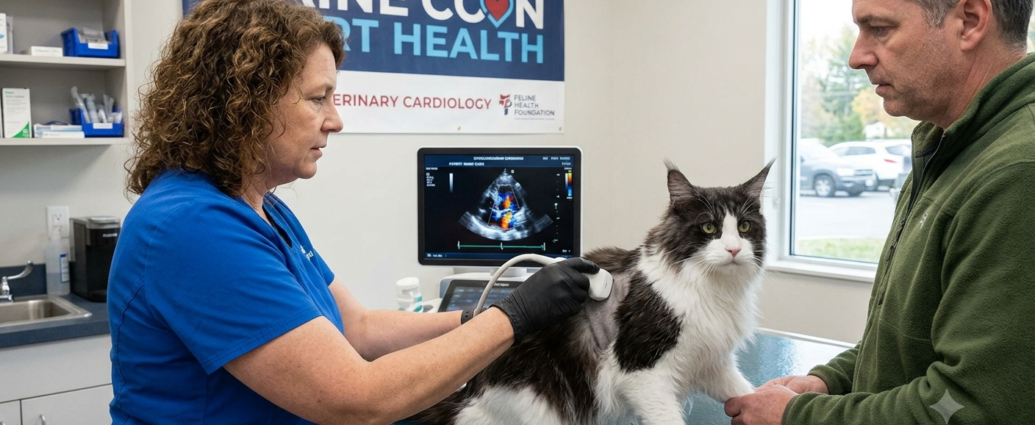
- Echocardiogram: The gold-standard diagnostic test for HCM, allowing a veterinary cardiologist to directly measure heart wall thickness and assess overall cardiac function
- Genetic testing: A DNA test can identify whether a cat carries the known Maine Coon HCM mutation, though it’s important to understand that not every cat with the mutation develops clinical disease, and not every case of HCM in the breed is linked to this specific mutation
- Cardiac biomarker blood tests (NT-proBNP): Can help flag cats with elevated cardiac stress, sometimes used as a supplementary screening tool between full echocardiograms
Suggested screening schedule:
- Baseline echocardiogram around one year of age, since HCM can develop relatively early in some Maine Coons
- Repeat echocardiograms every 12–18 months through adulthood, since the disease can develop or progress over time even in cats that initially screen clear
- Genetic testing for breeding cats specifically, to help reduce the mutation’s prevalence in future litters
Ongoing Cardiac Care for Diagnosed Cats
For Maine Coons diagnosed with HCM, Maine Coon Heart Health management shifts toward monitoring progression and reducing complication risk rather than screening alone.
Management strategies:
- Regular veterinary cardiology follow-ups, with echocardiogram frequency adjusted based on disease severity and stability
- Medications, such as beta-blockers or other cardiac drugs, may be prescribed depending on the specific presentation and stage of disease
- Blood clot prevention medication is sometimes recommended for cats with an enlarged left atrium, given the elevated risk of a dangerous clotting event
- Monitoring for stress reduction, since acute stress or excitement can sometimes trigger complications in cats with significant heart disease
Lifestyle considerations for cats with HCM:
- Maintaining a calm, low-stress home environment
- Avoiding unnecessary strenuous activity in cats with more advanced disease
- Keeping a close relationship with a veterinarian familiar with feline cardiology, ideally including access to a veterinary cardiologist for more complex cases
Choosing a Maine Coon Responsibly
For prospective owners, protecting long-term Maine Coon Heart Health starts before adoption. Seek out breeders who screen their breeding cats through echocardiograms and, where relevant, genetic testing, and who can provide documentation of clear cardiac health in the parent cats. While this doesn’t eliminate risk entirely, given how prevalent HCM is in the breed, it meaningfully improves the odds of a heart-healthy kitten.
Final Thoughts
Maine Coons are magnificent, affectionate cats, but their well-documented predisposition to Hypertrophic Cardiomyopathy means Maine Coon Heart Health deserves consistent, proactive attention throughout their lives. Committing to regular echocardiogram screening starting in early adulthood, understanding the role of genetic testing, and working closely with a vet if HCM is diagnosed together give owners the best possible chance of supporting a long, comfortable life for their Maine Coon.