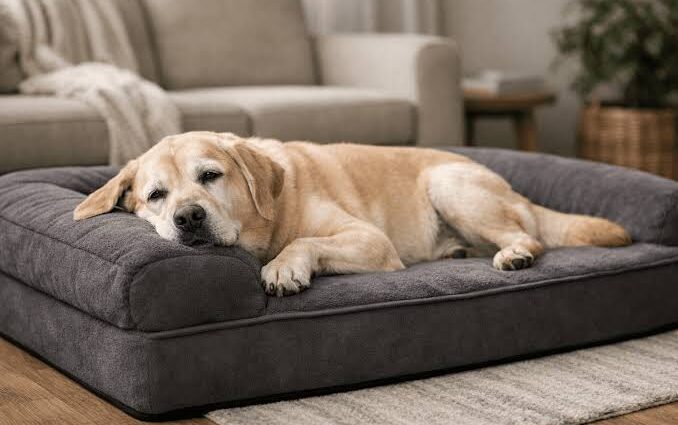
Seeing your dog struggle to get up or rest comfortably is one of the hardest parts of watching them age. While many owners first notice joint stiffness or physical signs like an older dog trembling in hind legs when standing, one of the most effective daily ways to support their recovery and comfort happens right where they sleep. However, with hundreds of pet brands claiming to offer “orthopedic” support, finding a bed that actually relieves pressure on aching joints—rather than flattening after a few weeks—can be frustrating. In this guide, we break down the clinical science behind real memory foam density, proper weight distribution, and the key features to look for so you can choose a bed that gives your dog genuine, long-lasting pain relief.
I. Introduction
- The Problem: The term “orthopedic” isn’t regulated in the pet industry. Dozens of cheap beds call themselves orthopedic despite flattening within weeks.
- The Medical Impact: How proper weight distribution reduces point pressure on elbows, hips, and knees—improving mobility, morning stiffness, and sleep quality for arthritic dogs.
- The Goal of This Guide: Provide a clear, vet-informed evaluation framework so you can choose a bed that lasts years, not months.
II. The Core Science: What Makes a Bed Truly “Orthopedic”?
1. High-Density Foam vs. Cheap Polyfill
- The Dual-Layer Architecture: Why the best beds use a firm support base (to prevent bottoming out) topped with high-density viscoelastic memory foam (to cradle joint pressure points).
- Understanding Foam Density:
- Low Density (1.5–2.5 lbs): Sags quickly, creates hammock effects, provides zero pressure relief.
- High/Medical-Grade (4.0–5.0+ lbs): Conforms with body heat, maintains structural integrity under heavy weight, lasts 2+ years.
- Certifications to Look For: CertiPUR-US® (non-toxic off-gassing) and OEKO-TEX® standards.
2. Bed Silhouette & Sleep Style
- Sprawlers & Side Sleepers: Flat mattress/pillow designs with open edges for full leg extension.
- Curlers & Head-Resters: Bolstered walls to support the neck, spine, and provide a feeling of security.
- Senior & Arthritic Dogs: Low-profile, step-in entries (avoiding high step-overs that strain stiff joints).
III. Step-by-Step Buying Criteria Checklist
| Evaluation Factor | What to Look For | Why It Matters |
| Support Core | High-density memory foam (4.0+ lb) + solid base foam | Prevents elbows and hips from hitting the floor. |
| Waterproof Liner | TPU / PUL internal barrier (between foam and cover) | Protects foam from accidents, drool, or wet paws without noisy plastic rustling. |
| Cover Fabric | Stretchy, breathable, machine-washable outer fabric | Rigid fabric cancels out the memory foam contouring effect. |
| Base Grip | Non-skid / rubberized bottom surface | Stops the bed from sliding when a dog pushes up to stand. |
| Bed Height | At or slightly below ankle/carpus height | Allows easy sit-to-stand transition without excessive joint flex. |
IV. Sizing Guide: Getting the Dimensions Right
- The Nose-to-Tail Measurement Formula: Measure your dog in their natural sleeping position from nose to base of tail, then add 2–4 inches.
- Inner vs. Outer Dimensions Trap: Bolster cushions can reduce usable space by 30% to 50%. Always buy based on usable inner foam area.
- Weight-Based Foam Thickness Chart:
- Under 30 lbs: 2 to 3 inches of foam
- 30–75 lbs: 4 to 5 inches of foam
- 75–120+ lbs: 6 to 8+ inches of dual-layer support foam
V. Top Recommendations by Category (Short-List Summary)
(Include product callouts linking out to individual reviews or affiliate partners)
- Best Overall Orthopedic Bed: (High-density dual-foam core with washable cover)
- Best for Senior Arthritic Dogs: (Step-in design with low front profile)
- Best for Heavy Chewer / Mess-Prone Dogs: (Waterproof inner lining with ripstop cover)
- Best Budget-Friendly Real Orthopedic Option: (Solid foam mattress without expensive bolsters)
VI. Veterinary Tips & Maintenance Advice
💡 Vet Tip Box: Maximizing Joint Relief
“Place orthopedic beds away from cold floor drafts or air conditioning vents. Cold temperatures can aggravate joint stiffness in dogs with osteoarthritis. For extra warmth and pressure relief in winter, choose a bed with a thermal-reflective fleece liner.”
- Cleaning & Care: How to clean the outer cover without shrinking it, and why memory foam core should never be submerged in a washing machine.
- When to Replace an Orthopedic Bed: Warning signs (visible sag over 1 inch, loss of foam bounce-back, persistent odorous moisture penetration).
VII. Frequently Asked Questions (FAQ Section)
- At what age should a dog start using an orthopedic bed? (Answer: Proactively from adulthood, especially for large breeds predisposed to hip dysplasia).
- Is memory foam or cooling gel memory foam better? (Answer: Cooling gel is great for thick-coated breeds to avoid overheating, as standard memory foam retains body heat).
- Can an orthopedic bed replace joint supplements or medication? (Answer: It complements veterinary treatment by offering mechanical relief during rest, but does not replace medical treatment).