Introduction
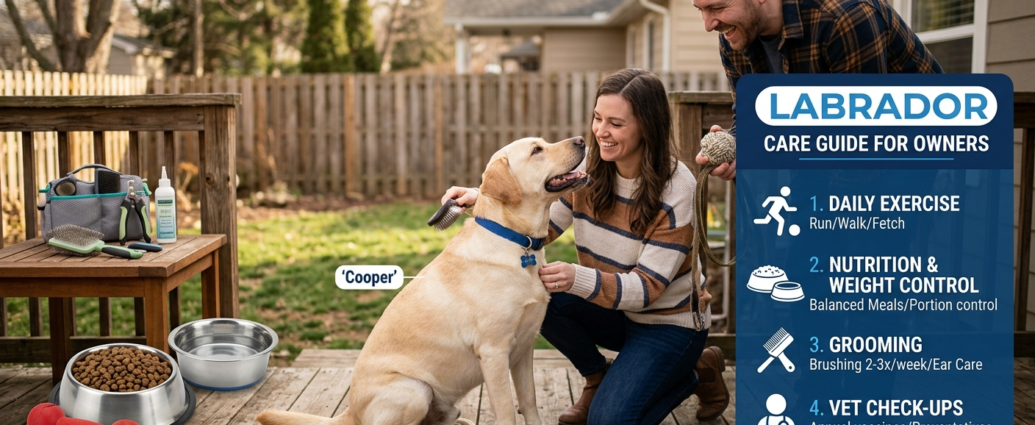
A thorough Labrador Care Guide has to go beyond basic feeding and walks, since Labradors carry a specific set of predictable health and behavior challenges tied directly to their genetics and body structure. This Labrador Care Guide covers the three issues that come up most consistently for this breed — a strong tendency toward obesity, a higher-than-average rate of ear infections, and exercise needs that are easy to underestimate. Whether you’re raising a Labrador puppy or adjusting the routine for an adult dog, this Labrador Care Guide gives you a practical, vet-informed starting point.
Why Labradors Need Specific Care Attention
Labradors are consistently ranked among the most popular family dogs, prized for their friendly temperament, trainability, and versatility as both companions and working dogs. That same food-driven, high-energy nature that makes them so trainable also makes them prone to specific, well-documented health issues. A complete Labrador Care Guide has to address these tendencies directly rather than relying on generic large-breed advice, since Labrador-specific genetics play a measurable role in several of the conditions covered here.
Obesity Management: A Breed-Specific Challenge
Weight management is arguably the single most important topic in any Labrador Care Guide, since Labradors have a genetic predisposition toward obesity that sets them apart from most other breeds.
Why Labradors gain weight so easily:
- Research has identified a gene variant (POMC) common in Labradors that’s linked to increased food-seeking behavior and slower satiety signals
- Their food motivation makes them highly responsive to treats, which can lead to unintentional overfeeding
- Reduced activity as dogs age, without a corresponding reduction in calories, compounds weight gain over time
Practical obesity management strategies:
- Measure meals precisely rather than estimating, and adjust portions based on ideal body weight rather than current weight
- Limit treats to roughly 10% of daily calories, favoring low-calorie options like carrots or green beans for training rewards
- Perform monthly body condition checks — you should be able to feel the ribs with light pressure and see a visible waist from above
- Avoid free-feeding, and resist the urge to respond to begging behavior with extra food
Because excess weight significantly worsens joint stress, exacerbates hip dysplasia symptoms, and shortens average lifespan, obesity management deserves ongoing attention throughout a Labrador’s entire life, not just during obvious weight gain periods.
Ear Infections: A Common but Manageable Issue
Ear health is another recurring theme in any serious Labrador Care Guide, since the breed’s floppy ears and love of water create ideal conditions for recurring infections.
Why Labradors are prone to ear infections:
- Floppy ears reduce airflow, trapping moisture and warmth that bacteria and yeast thrive in
- Their enthusiasm for swimming means water frequently enters the ear canal
- Allergies, which are relatively common in the breed, often present first as chronic ear inflammation
Signs of an ear infection:
- Head shaking or tilting
- Scratching at the ears more than usual
- Redness, swelling, or a noticeable odor
- Dark or excessive discharge inside the ear
Prevention and management strategies:
- Dry ears thoroughly after every swim or bath using a clean towel or vet-approved ear-drying solution
- Check ears weekly for early signs of redness or odor before infections become painful
- Use a vet-recommended cleaning solution regularly, rather than cotton swabs, which can push debris deeper into the canal
- If infections recur frequently, ask your vet about testing for underlying allergies, since chronic ear issues are often a symptom rather than the root cause
Left untreated, recurring ear infections can lead to chronic inflammation and even hearing damage, making consistent ear care a genuine health priority rather than a cosmetic afterthought.
High-Energy Care: Meeting a Working Breed’s Needs
The third pillar of any complete Labrador Care Guide is exercise, since Labradors were bred as working retrievers and carry genuinely high energy requirements, especially in the first several years of life.
Understanding Labrador energy needs:
- Adult Labradors typically need 60–90 minutes of daily exercise, with working-line dogs often needing even more
- Their retrieving instinct means structured games like fetch provide both physical exercise and mental satisfaction
- Under-exercised Labradors are prone to boredom-driven destructive behavior, excessive chewing, and weight gain
Effective ways to meet energy needs:
- Combine physical exercise (walks, fetch, swimming) with mental stimulation (puzzle feeders, obedience training) for a well-rounded routine
- Swimming is an excellent option that builds stamina with less joint impact than running
- Puppies should avoid high-impact activity like long runs or repeated jumping until growth plates close, typically around 12–18 months
- Senior Labradors still need regular movement, just adjusted to shorter, gentler sessions to maintain mobility and manage weight
Because low activity levels directly worsen the breed’s obesity tendency, consistent daily exercise isn’t just about behavior — it’s a core part of preventive health care within any effective Labrador Care Guide.
Bringing It All Together
The three areas covered in this Labrador Care Guide — obesity management, ear infection prevention, and high-energy care — are more connected than they might first appear. A well-exercised Labrador is less likely to overeat out of boredom, a lean Labrador experiences less joint strain during activity, and a dog with dried, well-maintained ears avoids one of the most common preventable health complaints in the breed. Addressing all three consistently, rather than reactively, is what separates a genuinely well-cared-for Labrador from one just getting by on the basics.
Final Thoughts
Labradors are food-motivated, high-energy, and endlessly affectionate companions, but that same combination of traits creates specific care demands new owners often underestimate. Following the guidance in this Labrador Care Guide — measured feeding, regular ear checks, and consistent daily exercise — gives owners a realistic framework for supporting their dog’s health from an energetic puppyhood through a comfortable senior life.