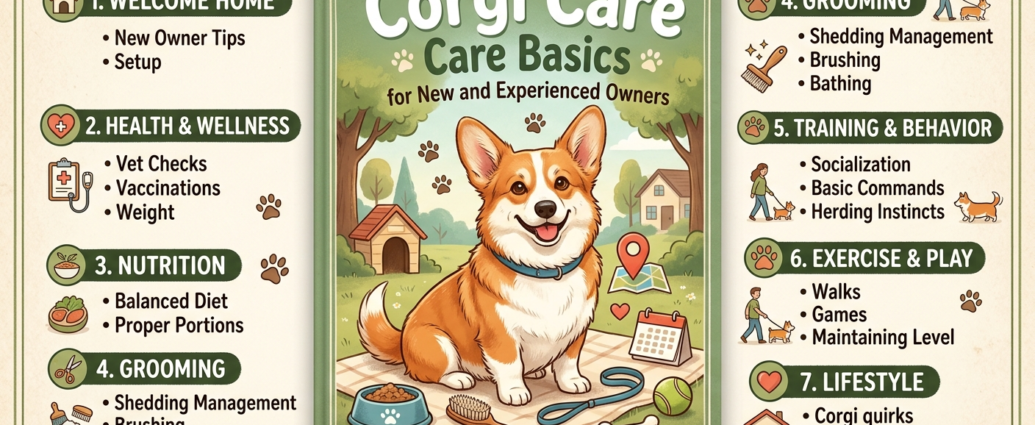
Introduction
Corgi Care Basics start with understanding one simple fact: this breed’s long back, short legs, and big personality all come from the same herding heritage, and each one carries its own care requirements. This guide to Corgi Care Basics covers the three issues that come up most often with Pembroke and Cardigan Welsh Corgis alike — weight management, spinal health, and the high energy levels bred into them as working herding dogs. Whether you’re raising a Corgi puppy or adjusting the routine for an adult dog, these Corgi Care Basics give you a practical, vet-informed starting point.
Why Corgis Need Specialized Care
Corgis were bred to herd cattle and sheep, nipping at heels and moving low to the ground to avoid kicks — a job that shaped their signature long torso, short legs, and remarkably high stamina. That same body structure that makes them so recognizable is also the reason Corgi Care Basics look different from generic small-breed advice. Their proportions put unusual stress on the spine, their appetite and small stature make weight gain easy, and their working-dog energy needs an outlet that a short daily walk simply won’t provide.
Managing Weight: A Small Body Under Pressure
Weight control is one of the most important pieces of Corgi Care Basics, since even a small amount of extra weight has an outsized effect on a Corgi’s long spine and short legs.
Why weight matters so much for Corgis:
- Their elongated back bears more relative stress per pound than breeds with more proportionate frames
- Corgis are notoriously food-motivated, making overfeeding and begging-driven treats a common issue
- Excess weight significantly increases the risk of spinal injury and accelerates joint wear
Practical weight management strategies:
- Measure meals with a standard cup rather than estimating, and stick to feeding guidelines based on ideal (not current) body weight
- Limit treats to roughly 10% of daily calories, using small, low-calorie options for training rewards
- Perform a monthly rib check — you should be able to feel, but not see, the ribs with light pressure
- Avoid feeding table scraps, which add up quickly in a dog this size
Keeping a Corgi lean isn’t just about appearance; it’s one of the single most effective ways to protect their back and joints long-term.
Back Health: Protecting a Long Spine
Spinal health deserves its own section in any serious discussion of Corgi Care Basics, since Corgis are among the breeds most predisposed to Intervertebral Disc Disease (IVDD) due to their long-back, short-leg build.
Signs of potential back problems:
- Reluctance to jump, climb stairs, or be picked up
- A hunched posture or visible pain when touched along the spine
- Dragging of the rear legs or sudden weakness, which requires immediate veterinary attention
Prevention strategies:
- Use ramps or steps for furniture and vehicles rather than allowing jumping
- Discourage repetitive stair use, especially in puppies and seniors
- Keep body weight lean, since spinal load increases directly with excess weight
- Support the torso properly when picking them up, rather than lifting under the front legs alone
- Consider a supportive harness instead of a collar to reduce strain during walks
Because IVDD can progress quickly, any sudden change in mobility or apparent back pain should be treated as an urgent veterinary matter rather than something to monitor at home.
Managing High Herding Energy
The third pillar of Corgi Care Basics is energy management. Despite their short legs, Corgis were bred for long working days moving livestock, and that stamina doesn’t disappear in a companion setting.
Signs of under-exercised herding energy:
- Nipping at heels, ankles, or moving objects (a classic herding instinct redirected at home)
- Excessive barking or fixation on movement, like cars or bicycles
- Restlessness, chewing, or other boredom-driven behaviors
Effective ways to meet their energy needs:
- 30–60 minutes of daily activity, split across multiple sessions rather than one long outing, to protect the spine from prolonged high-impact movement
- Low-impact exercise options, like flat walks or swimming, which build stamina without the jarring stress of jumping or sprinting
- Herding-instinct outlets, such as treibball (herding large balls) or structured fetch, which satisfy their natural drive in a controlled way
- Mental stimulation, including puzzle feeders and obedience training, which tires a working breed’s mind as much as its body
- Consistent daily structure, since Corgis often do best with a predictable routine that mimics the purposeful rhythm of working life
Meeting a Corgi’s energy needs isn’t optional — a bored, under-exercised Corgi is far more likely to develop nuisance behaviors than one given a consistent, structured outlet.
Bringing It All Together
The core of Corgi Care Basics comes down to recognizing how interconnected these three areas really are. A lean Corgi puts less strain on its spine, a Corgi with a protected back can safely enjoy the exercise needed to burn off herding energy, and a mentally and physically satisfied Corgi is far less likely to overeat out of boredom. Treating weight, back health, and energy as one connected system — rather than three separate issues — is what actually keeps this breed thriving.
Final Thoughts
Corgis are affectionate, clever, and endlessly entertaining companions, but their unique body structure means they need more targeted care than their small size might suggest. Applying these Corgi Care Basics consistently — watching portion sizes, protecting the spine from unnecessary strain, and giving their herding instincts a healthy outlet — gives owners a strong foundation for a long, active, and comfortable life together.