Hyperthyroidism in cats is the most common endocrine disorder diagnosed in felines over the age of ten, caused by an overactive thyroid gland producing excess thyroid hormone. This hormone regulates metabolism, so when levels climb too high, nearly every organ system in the body is affected. The good news is that hyperthyroidism in cats is highly treatable when caught early, and several effective treatment options exist depending on a cat’s overall health and lifestyle.
What Causes Hyperthyroidism in Cats?
In the vast majority of cases, hyperthyroidism in cats is caused by a benign enlargement of the thyroid gland (adenomatous hyperplasia) rather than cancer, though thyroid carcinoma accounts for a small percentage of cases. The exact cause isn’t fully understood, but researchers suspect a combination of genetics, environmental factors, and diet may play a role. Because it develops slowly, hyperthyroidism in cats often goes unnoticed in its earliest stages, which is why routine senior wellness screening is so important.
Early Symptoms of Hyperthyroidism in Cats
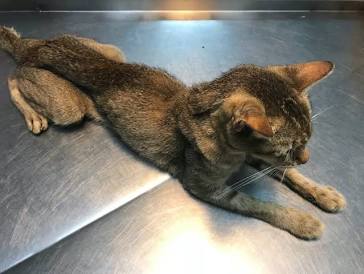
One of the most distinctive features of hyperthyroidism in cats is that affected cats often eat more than usual while still losing weight — a combination that surprises many owners who assume weight loss means a cat isn’t eating enough. Other early signs to watch for include:
- Weight loss despite a normal or increased appetite
- Increased thirst and urination
- Restlessness, hyperactivity, or increased vocalization, especially at night
- A faster than normal heart rate, sometimes noticeable as a racing pulse
- Vomiting or diarrhea
- A greasy, unkempt, or matted coat
- Increased shedding
Because these early symptoms can resemble other conditions common in older cats, such as diabetes or kidney disease, a proper veterinary workup is essential rather than assuming the cause based on symptoms alone. Any senior cat showing unexplained weight loss combined with a big appetite should be tested for hyperthyroidism in cats as a first step.
How Vets Diagnose Hyperthyroidism in Cats
Diagnosis typically involves a combination of physical exam findings and bloodwork:
- Neck palpation — vets often feel for an enlarged thyroid gland, which can sometimes be detected as a small nodule near the trachea
- Total T4 blood test — the primary screening test; elevated T4 levels usually confirm hyperthyroidism in cats
- Free T4 test — used when total T4 is borderline or when other illnesses might be masking the result
- Complete blood count and chemistry panel — to check for concurrent conditions like kidney disease, which is common in the same age group and can influence treatment choice
- Blood pressure check — since hyperthyroidism in cats frequently causes secondary hypertension, which can damage the eyes, heart, and kidneys if untreated
- Cardiac assessment — an ECG or echocardiogram may be recommended if a heart murmur or arrhythmia is detected, since prolonged hyperthyroidism can lead to thickening of the heart muscle
Treatment for Hyperthyroidism in Cats
There are four main approaches to treatment for hyperthyroidism in cats, and the right choice depends on the cat’s age, kidney function, other health conditions, and the owner’s ability to manage ongoing care.
Radioactive Iodine Therapy (I-131)
Considered the gold standard treatment for hyperthyroidism in cats, radioactive iodine therapy destroys overactive thyroid tissue while leaving normal tissue intact. It requires a single injection, a short hospital stay for radiation safety, and cures the majority of cats permanently without daily medication. It is not typically recommended for cats with advanced kidney disease, since increasing thyroid function too quickly can unmask reduced kidney filtration.
Anti-Thyroid Medication
Methimazole, available as a pill or transdermal gel, is a common first-line treatment for hyperthyroidism in cats, particularly for owners who want a reversible option or for cats not suited to radioactive iodine. It controls hormone production but does not cure the underlying gland enlargement, so it must be given consistently for life, with regular bloodwork to adjust the dose.
Prescription Iodine-Restricted Diet
A therapeutic diet that limits iodine intake can control hyperthyroidism in cats by starving the thyroid gland of the iodine it needs to overproduce hormone. This approach only works if the cat eats no other food or treats, which makes it impractical in multi-cat households but can be effective for cats that will accept a strict diet.
Surgical Thyroidectomy
Surgical removal of the affected thyroid tissue is less common today given the availability of radioactive iodine, but it remains an option in certain cases, particularly when a single, easily accessible nodule is present.
Monitoring After Treatment
Whichever treatment for hyperthyroidism in cats is chosen, follow-up bloodwork is essential to confirm thyroid hormone levels have normalized and to watch kidney function, since correcting hyperthyroidism can sometimes reveal previously masked kidney disease. Most vets recommend rechecking T4 levels and kidney values 3-4 weeks after starting treatment, then periodically thereafter.
Outlook for Cats With Hyperthyroidism
With appropriate treatment, the prognosis for hyperthyroidism in cats is generally very good, and many cats return to a healthy weight and normal energy levels within weeks of starting therapy. The key is catching it early — if your cat is losing weight despite eating well, seems unusually restless, or has developed a faster heartbeat, it’s worth scheduling a thyroid panel with your veterinarian rather than waiting for symptoms to worsen.
Disclaimer: This article is for educational purposes and is not a substitute for professional veterinary diagnosis or treatment. If your cat shows any symptoms described here, consult a licensed veterinarian promptly.